

 Español
 Français
 Deutsch
 Italiano
 Português
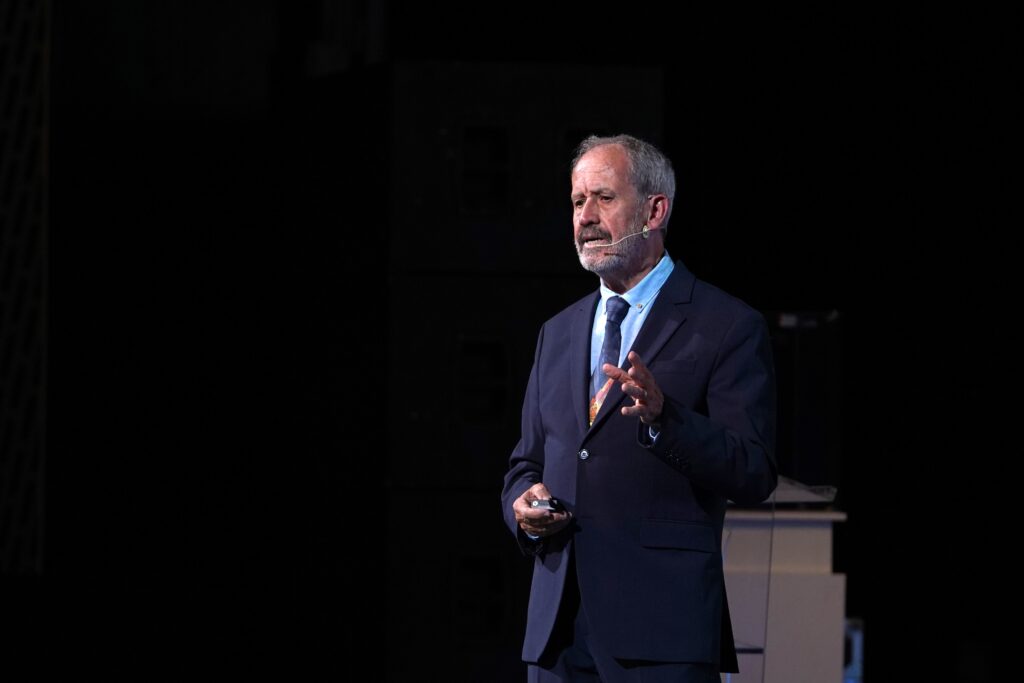
Mental health in the 21st century faces a historic paradigm shift driven by the need to look beyond superficial symptoms. In a recent and revealing intervention aimed at health professionals, Dr. José Luis Marín has focused on childhood trauma, defining it not just as an isolated event of violence, but as a structural fracture in the basic beliefs of safety with which an individual enters the world. According to the expert, a large part of the symptomatology that professionals encounter in consultations today are the external manifestations of an internal wound that never healed.
For Dr. Marín, the traditional clinical approach has systematically made the mistake of treating the symptom as the illness itself, without understanding that the symptom is, in reality, a defensive solution to unbearable pain. When observing patients, clinicians often remain on the surface of behavior. However, Marín insists that the “open wound” diagnosed as opioid addiction or major depression is the result of unintegrated trauma. The goal of modern psychotherapy, therefore, should not simply be the suppression of dysfunctional behavior, but to achieve the actual healing of the original traumatic experience.
This traumatic fracture breaks what Marín calls the “belief in invulnerability.” We all go out every morning convinced that tragedies happen to others, a necessary illusion for daily survival. However, childhood trauma destroys this conviction, leaving the child and later the adult in a world they perceive as disordered, unpredictable, and meaningless. The traumatized patient not only suffers from what happened to them, but from the loss of their ability to feel safe in the world, which generates a permanent state of alert that consumes their biological resources.
In his presentation, the director of Psychotherapy Training clearly distinguishes between two categories of trauma to guide clinical practice. “Acute or Type I Trauma” is a specific event, such as an accident or a natural disaster, which has a “social voice” and is easily recognized by the environment. However, the true challenge for contemporary psychology lies in “Complex or Type II Trauma,” developmental trauma. This does not always manifest with major outbursts of physical violence, but rather consists of less intense but repeated and sustained experiences over time, such as neglect or abandonment.
“The denunciation of child sexual abuse as a silent pandemic”
One of the most critical and courageous points of the intervention was the denunciation of child sexual abuse as a “silent pandemic.” Drawing on official data from the Ministry of Health, Marín recalled that one in four women in Spain has suffered abuse in childhood, and that in 85% of cases the aggressor belongs to the family environment. This reality remains hidden under a layer of systematized denial. Society often avoids “opening the melon” due to the fear and pain generated by confronting such a disappointing truth. This denial forces victims into a long pilgrimage of erroneous diagnoses.
The expert also warned about new forms of trauma specific to Western society, which he called the “Abandonment of the 21st Century.” This type of early relational trauma arises from a lack of emotional attunement between parents and children. In a system where professional success clashes with biological parenting times, children are often “installed” in an endless number of extracurricular activities. The child, who biologically only needs presence, gaze, and attunement, receives material goods in return. As Marín points out, if a baby needs a hug and receives a technological object, a deep wound of unprotectedness occurs.
The basis of this discourse is purely neurobiological. Humans are born with a “ruined” brain that is physically built through the relationship with others. The gaze of parents, touch, and containment are the architects of neural connections. If the bond is established from peace, the adult will develop resilience. If it is built from fear or doubt, the brain organizes itself for constant defense, interpreting any future stimulus as a threat. This “early relational trauma” is the origin of the vast majority of problems that saturate current consultations.
Marín introduced the key concept of “the known unthought,” referring to that primitive knowledge the patient possesses about their trauma but does not know how to verbalize or think about. The psychotherapist’s job is to transform that mute knowledge into a shared narrative that allows for healing. To do this, it is essential that the clinic abandons the question of “what’s wrong with you?” to focus on “what happened to you?” This distinction is, according to the psychiatrist, an ethical and legal obligation to avoid professional negligence.
“The system is turning adaptive reactions to precariousness or pain into disorders cataloged by the DSM.”
Towards the end of his intervention, Dr. Marín made a frontal critique of the “psychiatrization of life” model. He denounced how the system is turning adaptive reactions to precariousness or pain—such as sadness or anger—into disorders cataloged by the DSM. By labeling a patient with a “mental illness” for a vital protest, they are condemned to chronic medication that only flattens their emotions but does not heal their history. Antidepressants, according to Marín, do not cure; they often create altered mental states that prevent the patient from connecting with the root of their suffering.
Finally, the doctor called for the professional responsibility of psychologists and doctors. He urged them to be brave enough to ask about the past and to return their history to the patient. The medicine of the future involves understanding that systemic inflammation and psychic suffering are branches of the same tree whose root lies in childhood. Healing is not a chemical process, but an ethical act of recognition and repair of the subject’s historical truth. Only by shedding light on what has been hidden for so long can one aspire to true healing and freedom.