

 Español
 Français
 Deutsch
 Italiano
 Português
Course in Creative Play Therapy Interventions for Grieving Children, Youth and Families
Play-based tools for the conversations adults most want to avoid having with a grieving child.
«Taking the scary out of talking about the D word.»
— Liana Lowenstein


Play-based tools for the conversations adults most want to avoid having with a grieving child.
«Taking the scary out of talking about the D word.»
— Liana Lowenstein
Two sisters, eight and six, are asked in separate sessions to finger-paint how they feel about their father's death. He was shot dead on the basketball court beside their apartment block. The older girl paints the summer, the sun and swimming, and inside the sun a small blue fingerprint: her father, in heaven. The younger paints the man who shot him. Same death, same family, two entirely different griefs. That is the observation the whole course is built on, and the reason it insists that every child's grief has to be understood on its own terms before anything is done about it.
Liana Lowenstein has spent over thirty-five years working with bereaved children in Toronto, and what she brings is a body of play-based, concrete and immediately usable material for the parts of this work that clinicians most often postpone: telling a five-year-old the truth about how a parent was killed, making room for a child's anger at the person who died, letting a family talk to each other about a suicide. The course is built almost entirely on recorded sessions and real case material, so the techniques are seen being used, including the moments where they are hard.
Its framing is deliberately non-diagnostic. Grief is presented as a normal response to a complex situation rather than a disorder to be classified, and the course takes an openly cautious position on the recent arrival of prolonged grief disorder in the diagnostic manuals, arguing that with children the evidence is thin and the developmental picture too mobile. What replaces the label is careful observation: pay attention to the signs that this particular child is struggling, to what else has been happening in their life, and to the conditions around them.
Objectives
- Distinguish typical grief from childhood traumatic grief, and know why the order of intervention changes when trauma responses are present.
- Assess a grieving child through play-based activities, caregiver intake and information from school.
- Support caregivers to tell a child the truth about a death, including suicide, homicide and overdose.
- Use art, sand tray, stories and games to help a child tell the story of the death.
- Make room for ambivalence, guilt and anger towards the person who died.
- Work with the whole family to open communication that has closed around the loss.
Grief that is not allowed to be grieved
Two concepts organise much of the course's assessment thinking. Disenfranchised grief is grief that is not openly acknowledged or socially sanctioned: the child of the drunk driver who caused the crash, the child grieving a pet, the fourteen-year-old whose sand tray showed her father surrounded by fire because everyone around her believed he should rot in hell. Suffocated grief, following the work of Tashel Bordere, describes what happens when normal grief reactions such as distraction or anger are read as misbehaviour and punished rather than supported, which falls hardest on children from marginalised backgrounds. Both concepts move the clinical question outwards, from what is wrong with this child to what has been permitted to them.
Traumatic grief and why sequence matters
When a child perceives a death as terrifying, trauma responses interfere with mourning: they become fixed on the horrifying details, and any thought of the person, even a happy one, brings back the way they died, so they avoid thinking about them at all and the grief cannot move. The course teaches the distinction through paired case material, including two children in the sand tray whose responses separate cleanly along the line the literature draws — sadness and yearning on one side, anxiety and danger on the other. The clinical consequence is a rule about order: where trauma responses are present, they are addressed and partially resolved before grief work proper begins, and the trauma narrative itself is named as a technique only for those trained to use it.
Telling children the truth
A substantial part of the course addresses the reluctance of caregivers to say what actually happened, and the evidence that increased disclosure correlates with increased trust and decreased distress. It works through how to prepare a caregiver for that conversation, what words to offer them, and how to support them through it. The centrepiece is a recorded session in which a mother, who had originally told her five-year-old that her father died in an accident, explains with toys that he was shot by a friend during an argument — and in which the child, having first flinched away, takes the figures and shows what happened herself.
Making the difficult sayable through play
The working assumption throughout is that a concrete, playful format takes the fear out of subjects a child cannot approach through conversation. The course moves through psychoeducation about what death is and what happens to the body, a card game with versions adapted to suicide, homicide and substance-related death, an animal story told in burial and cremation versions, family games that get parents and children talking to each other, art activities for sadness, and play reenactment for telling the story of the death. Each activity is presented with its process questions, because the activity is treated as the beginning of the conversation rather than the whole of it.
Culture, family and the people around the child
Mourning rituals are approached as something to be learned from each family rather than assumed, and then explained to the child, since a ritual nobody has explained can frighten a child more than the death itself. Beliefs about what happens after death are taken from the caregiver and written into the stories and games rather than supplied by the therapist. Alongside this runs continuous work with the system around the child: caregiver intake and coaching, daily feelings check-ins at home, information gathered from teachers, and a tiered view of what level of support a given child actually needs, which for some is psychoeducation for their parents rather than therapy for them.
Questions about the programme? request information.
Request information with no obligation: we will answer your questions about the content, accreditation or payment options live.
A comprehensive programme, straight to the point.
3 video lessons, supplementary documentation and a module-level assessment. Click on each module to view the full detailed content.
A single module organised as a full clinical itinerary, from conceptual foundations through assessment to intervention and the closing of treatment, with experiential activities and recorded sessions throughout.
How the course works.
A 100% online programme designed to combine independent study with opportunities for direct interaction.
Assessment and accreditation
At the end of each module there is a multiple-choice self-assessment. To obtain accreditation you must complete all modules achieving a score of at least 80%. You have 3 attempts per test. Upon completing the programme you receive an accredited diploma.
Just another course on child and adolescent?
Not all clinical training programmes are equal. Choose clinical rigour over generic content or theory disconnected from practice.
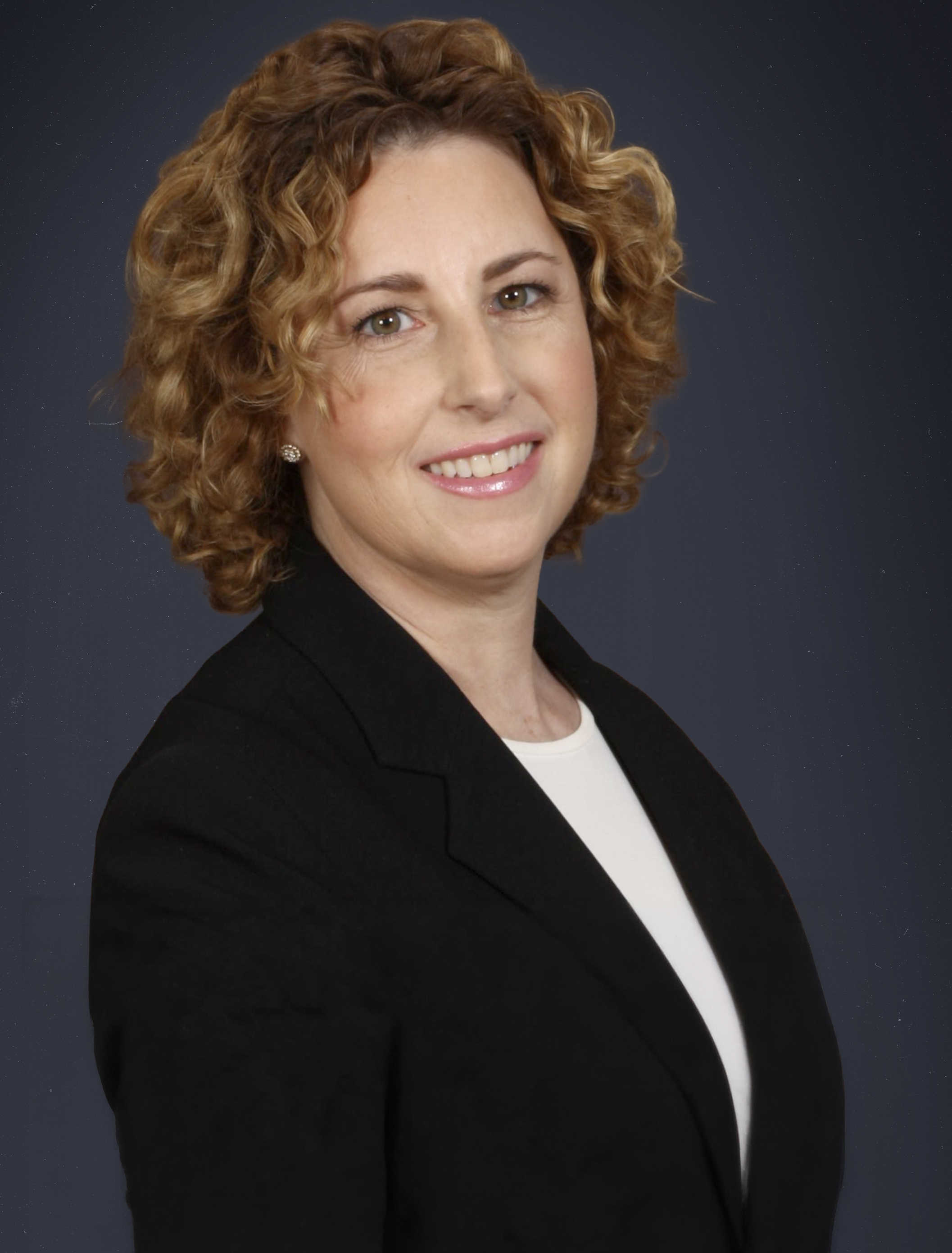
Liana Lowenstein is a Registered Social Worker, Certified Play Therapist-Supervisor and Certified TF-CBT Therapist who has been supporting children and families in Toronto for over thirty-five years. Her areas of specialty include trauma, bereavement, divorce, anxiety and ADHD, and her work integrates play therapy into evidence-based models. Alongside her clinical practice she provides supervision and consultation to mental health professionals, and she is the author of fifteen books used by clinicians around the world, several of them translated into Chinese, Korean and Turkish.
Endorsed by the leading institutions.
Institutional backing that matters for your CV, your career, and the validity of your continuing professional development.
Colegio Oficial de la Psicología de Madrid (COPM)
Federación de Asociaciones de Psicólogos y Médicos Psicoterapeutas de España (FAPYMPE)
Ilustre Colegio Oficial de Médicos de Madrid (ICOMEM)
SEMPyP (Sociedad Española de Medicina Psicosomática y Psicoterapia)
Diploma · Course in Creative Play Therapy Interventions for Grieving Children, Youth and Families
Awarded upon successful completion of the full programme
About the professional body seals on the diploma
To ensure specific professional body endorsement and in compliance with the regulations of these institutions, the inclusion of official professional association seals on the diploma is exclusive to students holding a degree in Medicine or Psychology. This distinction does not, however, affect the institutional endorsement of the programme's quality, ensuring that all our students, regardless of their degree, complete their training with qualifications whose excellence is fully recognised by these institutions.
Everything you need to know before enrolling.
If you have a question that does not appear here, write to us at info@psychotherapymasters.com and we will respond personally.
The course is 100% online with immediate access: as soon as you enrol you receive your virtual classroom credentials and can start straight away. There are no fixed start dates or mandatory schedule.
You have full access for 1 year to complete the programme at your own pace. Most students complete it alongside their regular clinical work.
At the end of each module there is a multiple-choice self-assessment quiz. To obtain accreditation you must complete all modules answering at least 80% of questions correctly. You have 3 attempts per quiz.
Upon completing the course you will receive your diploma.
The price includes: full access for 1 year to all 3 video lessons, all supplementary course materials, the self-assessment quizzes for each module, and the accreditation diploma upon completing the programme.
Yes. If after enrolling the course is not what you expected, you have up to 14 days to request a full refund, in accordance with our withdrawal policy.
Yes, we issue invoices in your name or in the name of a company/healthcare centre. For many professionals, the course is deductible as continuing education. If you need a specific invoice, please indicate this at the time of purchase.
Scholarships and solidarity access
Each edition we reserve a limited number of partial scholarships for professionals from Latin America, MIR/PIR residents, and psychotherapists who are unemployed. We believe that rigorous clinical knowledge cannot depend on your postcode.
Start today.
Immediate access.
No commitments. Access to the virtual classroom upon enrolment.