
 Español
 Français
 Deutsch
 Italiano
 Português
Certified Expert Course in Psychopathology and Psychiatry
Look beyond diagnosis and understand human suffering from a post-psychiatry perspective.
«Depression is not in your head, it's in your life.»
Johann Hari, 2022

Before you enrol, watch the first class.
No forms, no sign-up required. Experience the methodology of Dr. José Luis Marín first-hand and make an informed decision. What are the classes like?, open to everyone.
Enrol in the full courseLook beyond diagnosis and understand human suffering from a post-psychiatry perspective.
«Depression is not in your head, it's in your life.»
Johann Hari, 2022
This course arises from a fundamental need: to overcome the frequent error of «starting the house from the roof» in psychotherapeutic training. To implement an effective intervention program, it is essential to first know what will be intervened upon, avoiding the excessive consumption of resources on tools without understanding the fundamentals of psychopathology. The program, directed by Dr. José Luis Marín, aims to reclaim this ground.
A critical look at the biomedical model
Dr. Marín proposes a critical perspective towards the biomedical-pharmaceutical model of academic psychiatry, considering it outdated given the evidence that mental disorders are not solely a cerebral biochemical imbalance. The training addresses the prevailing «disorderitis» and the compulsive categorical diagnosis, arguing that it is the understanding of context and biography that defines pathology, not the label imposed upon it.
From post-psychiatry
From the perspective of post-psychiatry, the course offers the opportunity to understand patients in their complete history, overcoming the confusion between diagnostic category and real psychopathology. It proposes incorporating ignored knowledge, that which is known but not applied in clinical practice, and ending the "suddenly" to find the biographical meaning of symptom onset.
The five key questions
Psychopathology is the science concerned with understanding patients, and the course organizes it around five questions that the clinician should be able to answer for each person:
- What is happening to them?
- How is it happening to them?
- Since when?
- Why?
- What for?
The last two are rarely asked and are the ones that most change the perspective: thinking about what purpose the symptom serves (for the patient, the system, the culture) and why it appears precisely now.
Because patients don't consult for a symptom; they consult for a crisis.
A final objective: planning psychotherapy
The entire journey has a practical purpose: to help you plan psychotherapy. In current critical psychiatry, psychotherapeutic intervention is a fundamental tool, and the program's commitment is clear: fewer psychopharmaceuticals and more psychosocial therapeutic intervention. The course does not seek adherence, but rather to provoke independent thought and move beyond a polarized psychiatry that ends up using the patient as a hostage, incorporating what is useful from each position.
A journey through all of psychopathology
With this perspective, the program covers the major territories of psychopathology:
-
Fundamentals and critical diagnosis: the concepts of psychopathology and psychiatry, understanding psychoses and schizophrenias from a cultural and psychosocial perspective, «ignored knowledge», managing the first interview, and the adventures and misadventures of the DSM-5, with alternatives to traditional diagnosis.
-
Affective and anxiety disorders: the premise that «there are no depressions, there are depressed people», what depressions are and why we get depressed from an integrative approach, bipolar disorder, and the work of dismantling anxiety with the obsessive spectrum and pseudologia fantastica.
-
The body and traumatic history: «the body as a battlefield» in somatic, factitious, and body integrity identity disorders, and the weight of traumatic history in the genesis of the disorder, with adaptation as a disorder and dissociative disorders.
-
Sleep, suicidology, and new paradigms: sleep disorders as a poorly treated emergency, the suicidological dimension and grief for death by suicide, and post-psychiatry with an analysis of treatments.
All of this through master classes by Dr. Marín and invited specialist professors, who provide a multidisciplinary perspective, and extensive, updated documentation that incorporates advances in Psycho-neuro-endocrino-immunity as a way to understand and address mental disorders.
For decades, access to the best psychotherapy training depended on mastering the language it was taught in. Not anymore. Thanks to artificial intelligence, at Psychotherapy Masters we have broken down the language barrier to bring you the leading international specialists in your own language.
It is a leap that until very recently was unthinkable, and we take it with the utmost rigour. We always start from our instructors' original work, and every video is translated with AI technology under human direction and reviewed by native specialists, who guarantee the clinical fidelity of every concept.
First-class training, without borders.
Questions about the programme? request information.
Request information with no obligation: we will answer your questions about the content, accreditation or payment options live.
A comprehensive programme across 8 modules.
65 video lessons, supplementary documentation and a module-level assessment. Click on each module to view the full detailed content.
Establishes fundamental concepts and delves into a deep understanding of psychoses and schizophrenias, understood from a cultural perspective and with a psychosocial approach, from understanding the condition to the relationship between schizophrenia and culture and intervention.
Addresses diagnosis critically. Develops ignored knowledge, that which is known but not clinically applied, teaches how to conduct the first interview, and analyzes the adventures and misadventures of the DSM-5, presenting alternatives to traditional psychiatric diagnosis.
Develops the principle that there are no depressions, there are depressed people. Explores what depressions are, why and how we get depressed, with an integrative approach, and includes the study of bipolar disorder and related conditions.
Aims to dismantle anxiety. Analyzes pseudologia fantastica as a specific manifestation of human suffering, anxiety disorders in psychiatry, and the obsessive spectrum, including obsessive-compulsive disorder and other obsessive disorders.
The body as a battlefield. Analyzes the bodily manifestations of mental disorders: the body in psychiatry and as expression, factitious disorders and factitious disorder imposed on another, body integrity identity disorder, and eating disorders.
Places traumatic history at the genesis of mental disorder. Develops stress in psychiatry and the concept of adaptation as a disorder, and studies psychological trauma and dissociative disorders.
Addresses sleep disorders as a «poorly treated emergency». Covers the sleep-wake rhythm in psychiatry, the evaluation of sleep disorders, respiratory sleep disorders and their psychiatric manifestations, and intervention.
Concludes with the suicidological dimension and the approach to grief for death by suicide (with José González), the presentation of post-psychiatry as critical psychiatry, and the analysis of treatments, differentiating between «what you are expected to do and what you can, additionally, do».
How the course works.
A 100% online programme designed to combine independent study with opportunities for direct interaction.
Assessment and accreditation
At the end of each module there is a multiple-choice self-assessment. To obtain accreditation you must complete all modules achieving a score of at least 80%. You have 3 attempts per test. Upon completing the programme you receive an accredited diploma with 12 ECTS credits.
Just another course on psychopathology and psychiatry?
Not all clinical training programmes are equal. Choose clinical rigour over generic content or theory disconnected from practice.
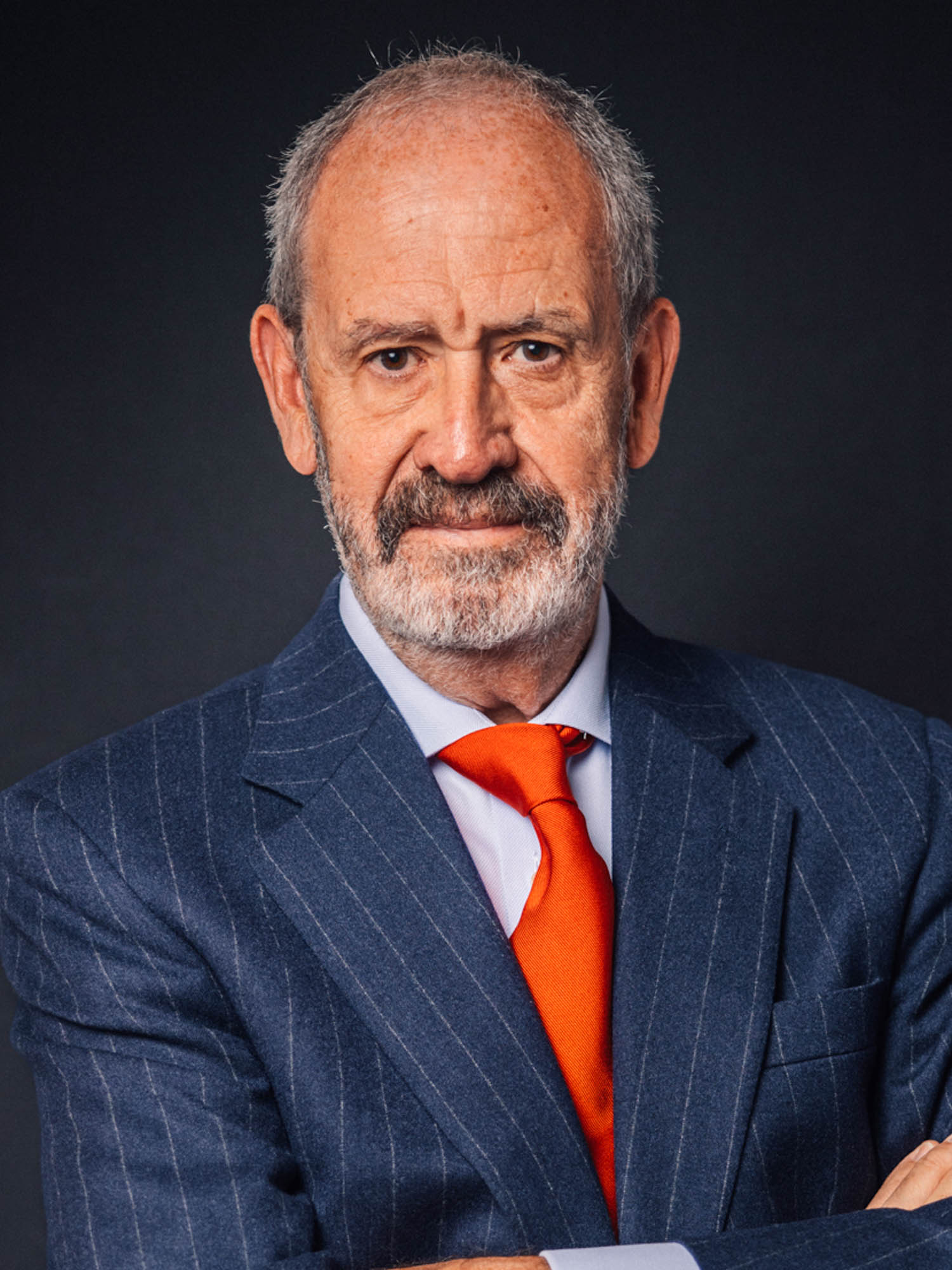
José Luis Marín López is a renowned Spanish psychiatrist and psychotherapist with over 40 years of experience. As the leader of the International Forum for Psychotherapy Training, he has been a key figure in the advancement of psychosomatic medicine and psychotherapy in Spain and internationally. His integrative and evidence-based approach has transformed therapeutic practice, emphasizing the mind-body connection and the social determinants of mental health.
Professionals who have already trained with us.
Psychologists, psychiatrists and psychotherapists applying what they have learned in their practice.
"Wonderful!"
"Very useful course, with critical ideas about psychiatry and current treatments, which reinforces my own pre-existing ideas through quality bibliography, and also provides me with new perspectives on aspects I hadn't delved into. I've learned a lot, and it has opened up new..."
"A new vision of Psychiatry, debunking labels and acquiring a systemic framework from human suffering to the development of diverse symptomatology, including psychiatric symptomatology. The course provides you with the keys to sincerely empathize with mental disorder and thus..."
"Fantastic, critical, and enriching exposition of psychopathology! It certainly broadens your perspective and gets you in the mindset for new ways of looking in the consulting room."
"A bit dense but very interesting."
"Another perspective."
"I really liked understanding what post-psychiatry is, demystifying the DSM, and the ideal approach to treat patients with an integrative vision and without so much focus on diagnosis."
"Excellent course, like all the ones I've done with Dr. Marín. Essential for any psychotherapist. Perhaps, having previously completed the rest of the expert courses that complete the Master's, it seemed to me that there was a lot of content duplication already explained in..."
"Truly an extraordinary experience, first and essential, Dr. Begoña Aznares and Dr. José Luis Marín, brilliant eminences, also the excellent collaboration of Dr. José González; the content, explanations, and bibliography of the Course very well achieved, thank you, thank you,..."
"This course has been, without a doubt, the most necessary and "mind-blowing" of the entire master's program. Its approach masterfully combines medical knowledge with a social, cultural, and deeply humanistic vision. The doctor's eloquence, his wisdom, and his ability to..."
"Thanks for letting me know the update is in progress!"
Endorsed by the leading institutions.
Institutional backing that matters for your CV, your career, and the validity of your continuing professional development.
Colegio Oficial de la Psicología de Madrid (COPM)
Federación de Asociaciones de Psicólogos y Médicos Psicoterapeutas de España (FAPYMPE)
Ilustre Colegio Oficial de Médicos de Madrid (ICOMEM)
SEMPyP (Sociedad Española de Medicina Psicosomática y Psicoterapia)
Diploma · Certified Expert Course in Psychopathology and Psychiatry
Awarded upon successful completion of all 8 modules of the programme
About the professional body seals on the diploma
To ensure specific professional body endorsement and in compliance with the regulations of these institutions, the inclusion of official professional association seals on the diploma is exclusive to students holding a degree in Medicine or Psychology. This distinction does not, however, affect the institutional endorsement of the programme's quality, ensuring that all our students, regardless of their degree, complete their training with qualifications whose excellence is fully recognised by these institutions.
Everything you need to know before enrolling.
If you have a question that does not appear here, write to us at info@psychotherapymasters.com and we will respond personally.
The course is 100% online with immediate access: as soon as you enrol you receive your virtual classroom credentials and can start straight away. There are no fixed start dates or mandatory schedule.
You have full access for 1 year to complete all 8 modules at your own pace. Most students complete it alongside their regular clinical work.
These are the requirements to access the course:
- No degree is required to take the courses.
- However, prior knowledge of the subject matter is recommended.
At the end of each module there is a multiple-choice self-assessment quiz. To obtain accreditation you must complete all modules answering at least 80% of questions correctly. You have 3 attempts per quiz.
Upon completing the course you will receive your diploma with 12 ECTS credits.
The price includes: full access for 1 year to all 65 video lessons, all supplementary course materials, the self-assessment quizzes for each module, and the accreditation diploma upon completing the programme.
You can also pay in instalments: from 159,80 US$/month over 6 payments.
Yes. If after enrolling the course is not what you expected, you have up to 14 days to request a full refund, in accordance with our withdrawal policy.
We also recommend watching the first class for free before enrolling, so you can assess the methodology with complete freedom.
Yes, we issue invoices in your name or in the name of a company/healthcare centre. For many professionals, the course is deductible as continuing education. If you need a specific invoice, please indicate this at the time of purchase.
Scholarships and solidarity access
Each edition we reserve a limited number of partial scholarships for professionals from Latin America, MIR/PIR residents, and psychotherapists who are unemployed. We believe that rigorous clinical knowledge cannot depend on your postcode.
Start today.
Immediate access.
No commitments. Access to the virtual classroom upon enrolment. And if you want to try it first, watch the first class for free.