
 Español
 Français
 Deutsch
 Italiano
 Português
Certified Expert Course in Personality Disorders: Clinical Practice and Approach to Complex Cases
Recognize the person before the disorder and personalize each intervention.
«It is more important to know what kind of person has a disease than to know what kind of disease a person has.»
— William Osler

Before you enrol, watch the first class.
No forms, no sign-up required. Experience the methodology of Dr. José Luis Marín first-hand and make an informed decision. What are the classes like?, open to everyone.
Enrol in the full courseRecognize the person before the disorder and personalize each intervention.
«It is more important to know what kind of person has a disease than to know what kind of disease a person has.»
— William Osler
This course addresses a fundamental reality of clinical practice: therapeutic failures are frequently related to the therapist's difficulty in adequately relating to the patient's person. Although the current academic trend focuses on the diagnostic categories of DSM-5, in real clinical practice, the therapist relates to personalities presenting specific symptoms. The program, directed by Dr. José Luis Marín, starts precisely from there.
The Alliance is Built with Personality
Dr. Marín bases his proposal on a principle that radically transforms the clinical approach:
The therapeutic alliance is built with personality, not with diagnosis.
Therefore, the approach to a patient with major depressive disorder and a dependent personality differs completely from the intervention for the same diagnosis in a histrionic personality. We do not treat the disorder; we treat the person who presents it.
Truly Personalized Strategies
This training is designed to:
- Recognize and differentiate the various forms of expression of personality and its disorders.
- Develop truly personalized intervention strategies.
To do this, it integrates knowledge about:
- Genetic factors.
- Environmental factors.
- Epigenetic factors.
- Developmental factors.
These elements intervene in the development of personality, providing the necessary tools for effective clinical intervention in the most complex cases.
A Realistic Goal for Change
The program starts from a demanding definition, that of Millon: personality is a complex pattern of deeply ingrained psychological characteristics, mostly unconscious and difficult to change, which are expressed automatically in almost all areas of functioning. Difficult, but not impossible. The key is knowing what can be changed: personality as such does not change, but the disorder can become a trait, and traits can become more adaptive. Pursuing major change often prevents even minor change, one of the most frequent errors in psychotherapy.
From Diagnostic Box to Clinical Map
The program unfolds in four main blocks:
-
Historical and relational foundations: the development of personality and personality disorder, in a journey from «the Seven Deadly Sins to DSM-5», the relationship between attachment bond and personality, the role of family and cultural factors, dependent personality, and the provocative «theory of human stupidity».
-
Clinical evaluation and therapeutic bond: the therapist-patient relationship and the management of the «difficult patient», evaluation using adaptive styles (absent, predatory, unstable, theatrical, and submissive), and the study of schizoid and paranoid personality.
The Patient is Always Right
A premise runs through the entire course:
The patient always has their reasons. They act maladaptively, of course, which is why they are in therapy; but they don't know how to do it any other way.
That is the only way they learned, in the early years of their life, to bond with themselves and with others. A paranoid, schizoid, or antisocial person has nothing personal against their therapist: they simply place on them, transferentially, what corresponds.
-
Specific personalities and trauma: antisocial and histrionic personality in everyday psychiatry and the dark triad, along with a complete module on borderline personality understood as a traumatic history with consequences.
-
Therapeutic intervention: the general approach to disorders, the study of narcissistic and negativistic personality, and Mentalization-Based Treatment as a specific tool that integrates all of the above.
The result is an understanding of personality that recognizes the trauma almost always present in its disorder and restores to the therapist what is essential: the ability to meet the person before the label.
For decades, access to the best psychotherapy training depended on mastering the language it was taught in. Not anymore. Thanks to artificial intelligence, at Psychotherapy Masters we have broken down the language barrier to bring you the leading international specialists in your own language.
It is a leap that until very recently was unthinkable, and we take it with the utmost rigour. We always start from our instructors' original work, and every video is translated with AI technology under human direction and reviewed by native specialists, who guarantee the clinical fidelity of every concept.
First-class training, without borders.
Questions about the programme? request information.
Request information with no obligation: we will answer your questions about the content, accreditation or payment options live.
A comprehensive programme across 6 modules.
33 video lessons, supplementary documentation and a module-level assessment. Click on each module to view the full detailed content.
Develops the concepts of personality and personality disorder: how and why a disordered personality develops, in a historical journey from «the Seven Deadly Sins to DSM-5», and the relationship between attachment bond and personality.
Analyzes the role of family and cultural factors in the development and maintenance of disorders. Introduces the provocative «theory of human stupidity» as a framework for understanding relational dynamics and studies dependent personality and obsessive personality.
Training in the therapist-patient relationship and the management of the so-called "difficult patient." It teaches the clinical assessment of personality disorders through adaptive styles (absent, predatory, unstable, theatrical, and submissive) and delves into schizoid and paranoid personality.
This module addresses antisocial and histrionic personality in detail within the framework of "everyday psychiatry," analyzing their manifestations in common relational contexts and incorporating the dark triad of personality.
This module is entirely dedicated to borderline personality from the perspective of "a traumatic history with consequences": what it is, its diagnosis, the role of early adverse experiences, and its approach, recognizing the trauma that is almost always present in a disordered personality.
Develops intervention strategies: Mentalization-Based Treatment as a specific tool, the study of narcissistic and negativistic personality, and the general approach to personality disorders, integrating all of the above into a coherent model.
How the course works.
A 100% online programme designed to combine independent study with opportunities for direct interaction.
Assessment and accreditation
At the end of each module there is a multiple-choice self-assessment. To obtain accreditation you must complete all modules achieving a score of at least 80%. You have 3 attempts per test. Upon completing the programme you receive an accredited diploma with 10 ECTS credits.
Just another course on psychological disorders?
Not all clinical training programmes are equal. Choose clinical rigour over generic content or theory disconnected from practice.
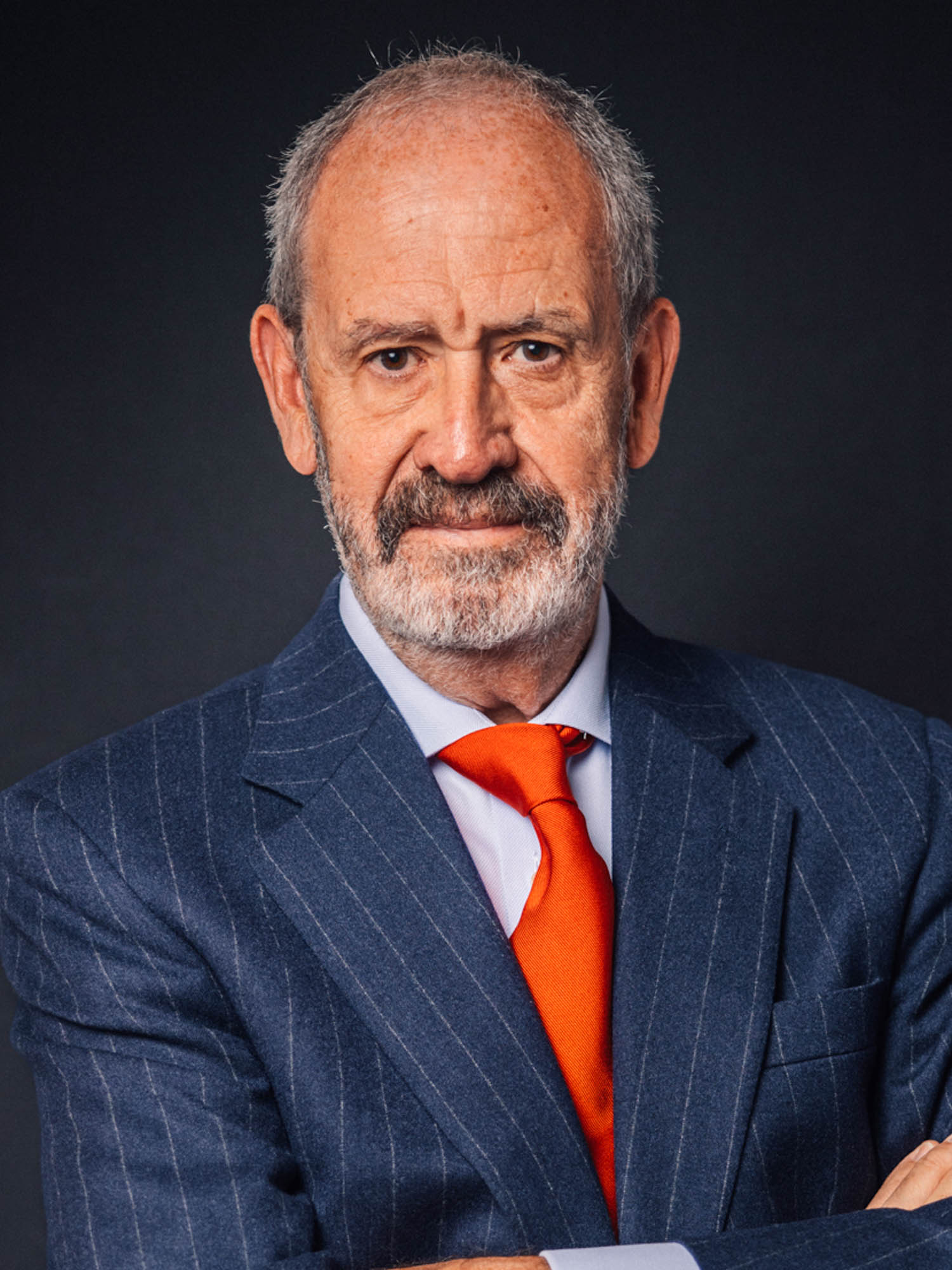
José Luis Marín López is a renowned Spanish psychiatrist and psychotherapist with over 40 years of experience. As the leader of the International Forum for Psychotherapy Training, he has been a key figure in the advancement of psychosomatic medicine and psychotherapy in Spain and internationally. His integrative and evidence-based approach has transformed therapeutic practice, emphasizing the mind-body connection and the social determinants of mental health.
Professionals who have already trained with us.
Psychologists, psychiatrists and psychotherapists applying what they have learned in their practice.
"It's a pretty comprehensive and condensed course, I really liked Dr. Marín's presentation, perhaps I missed more practical examples of transference and countertransference interventions, as it's extremely easy to act out countertransference with these patients."
"I absolutely loved the course! As a psychology student, I've learned so much. The psychotherapy you teach and practice seems to me the best way to treat someone. I'll definitely be back for more courses with you. Thank you!"
"Yes!"
"It's wonderful!"
"The last course was a bit dense but very complete. Dr. Marin's interventions were always timely and assertive."
"Very good course!"
"Excellent training! It has given me the necessary insight for identifying these disorders and managing them in clinical practice."
"I've been following Dr. José Luis Marín since he appeared on YouTube, and honestly, his vision of psychiatry and psychology really resonates with me. I've watched most of his conferences, talks, and interviews, and I enrolled in this course to nourish my clinical practice. I..."
"I felt enriched by the knowledge, and the impact on therapeutic processes is evident and very favorable for my clients and their families."
"It's a very enriching, fascinating, and revealing course! Thank you so much for sharing your wisdom to keep improving our psychotherapeutic practice."
"The training in personality disorders has been highly enriching, both in its conceptual rigor and its clinical applicability. Dr. Marín's professional trajectory and years of experience translate into precise, realistic, and deeply useful guidance for psychotherapeutic..."
"Doing the master's program was an enriching experience both personally and professionally. I can only say a thousand thanks!"
"That was it."
"It was a really useful course, and with lots of material for complementary reading and understanding of the lessons!"
"Dr. Marín's Personality Disorders course is very interesting, both professionally and personally. The way he explains the content makes it highly recommendable for those working in psychology, education, or health, but also for anyone who wants to better understand human..."
"The course delves deeply, clearly, didactically, and dynamically into the true root of many human problems. It's an essential approach that, however, I really missed during my undergraduate studies."
"What a pleasant surprise to find humanity, precision, and up-to-date content in a super entertaining and complete training! Thank you so much!"
"I loved that everything was explained clearly, straight to the point. Finally someone speaks clearly!"
"I haven't watched so many videos in a row since Game of Thrones. JL is a genius!"
"Really good, but I watch the videos several times because I'm not that good at Spanish. When will there be videos in English?"
"This course made me rethink my way of doing therapy. It gave me tools I had never considered. Jose Luis, please let me know by email if you give another in-person conference."
"This is the fifth time I'm watching this video. I couldn't be more grateful. Jose Luis, you are an open book!"
"I'm hooked on these videos. I couldn't be more grateful. !Thank you so so much! Can't wait for you to give another conference in Madrid."
"José Luís Marín is an inexhaustible source of experience and knowledge. Anyone who wants to train as a good psychotherapist will find the right place here."
"I 100% recommend this training for anyone who wants to delve deeper into psychotherapy in a different way!"
"Dr. Marín has always been ahead of his time. One of the best professors I've seen, and I've been training for two decades."
Endorsed by the leading institutions.
Institutional backing that matters for your CV, your career, and the validity of your continuing professional development.
Colegio Oficial de la Psicología de Madrid (COPM)
Federación de Asociaciones de Psicólogos y Médicos Psicoterapeutas de España (FAPYMPE)
SEMPyP (Sociedad Española de Medicina Psicosomática y Psicoterapia)
Diploma · Certified Expert Course in Personality Disorders: Clinical Practice and Approach to Complex Cases
Awarded upon successful completion of all 6 modules of the programme
About the professional body seals on the diploma
To ensure specific professional body endorsement and in compliance with the regulations of these institutions, the inclusion of official professional association seals on the diploma is exclusive to students holding a degree in Medicine or Psychology. This distinction does not, however, affect the institutional endorsement of the programme's quality, ensuring that all our students, regardless of their degree, complete their training with qualifications whose excellence is fully recognised by these institutions.
Everything you need to know before enrolling.
If you have a question that does not appear here, write to us at info@psychotherapymasters.com and we will respond personally.
The course is 100% online with immediate access: as soon as you enrol you receive your virtual classroom credentials and can start straight away. There are no fixed start dates or mandatory schedule.
You have full access for 1 year to complete all 6 modules at your own pace. Most students complete it alongside their regular clinical work.
These are the requirements to access the course:
- No degree is required to take the courses.
- However, prior knowledge of the subject matter is recommended.
At the end of each module there is a multiple-choice self-assessment quiz. To obtain accreditation you must complete all modules answering at least 80% of questions correctly. You have 3 attempts per quiz.
Upon completing the course you will receive your diploma with 10 ECTS credits.
The price includes: full access for 1 year to all 33 video lessons, all supplementary course materials, the self-assessment quizzes for each module, and the accreditation diploma upon completing the programme.
You can also pay in instalments: from 125,14 US$/month over 6 payments.
Yes. If after enrolling the course is not what you expected, you have up to 14 days to request a full refund, in accordance with our withdrawal policy.
We also recommend watching the first class for free before enrolling, so you can assess the methodology with complete freedom.
Yes, we issue invoices in your name or in the name of a company/healthcare centre. For many professionals, the course is deductible as continuing education. If you need a specific invoice, please indicate this at the time of purchase.
Scholarships and solidarity access
Each edition we reserve a limited number of partial scholarships for professionals from Latin America, MIR/PIR residents, and psychotherapists who are unemployed. We believe that rigorous clinical knowledge cannot depend on your postcode.
Start today.
Immediate access.
No commitments. Access to the virtual classroom upon enrolment. And if you want to try it first, watch the first class for free.