
 Español
 Français
 Deutsch
 Italiano
 Português
Certified Expert Course in Eating Disorders
Discover the conflict hidden behind the food.
«An eating disorder is a symptom, a language of discomfort, of suffering.»
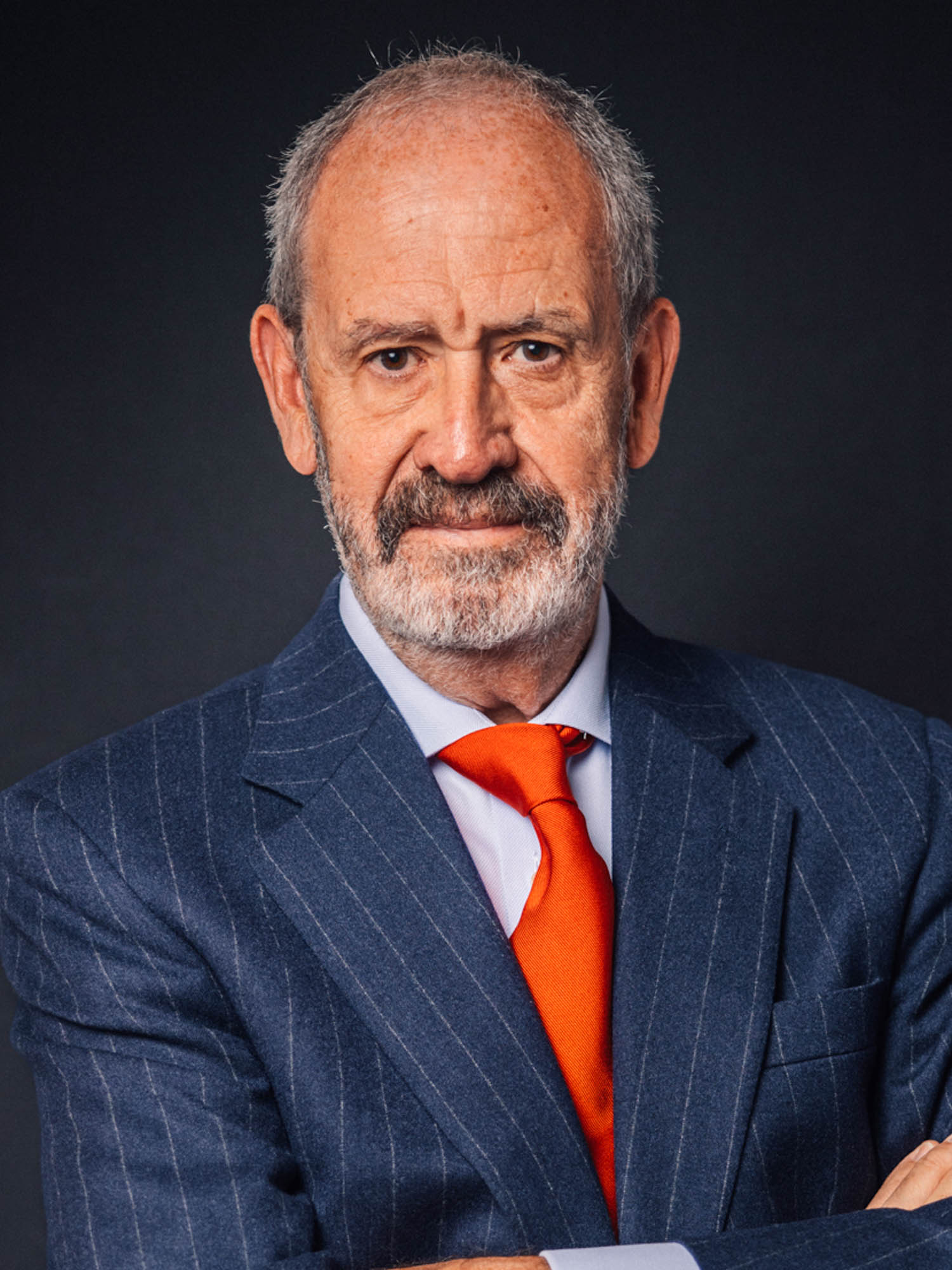
— Dr. José Luis Marín

Before you enrol, watch the first class.
No forms, no sign-up required. Experience the methodology of Dr. José Luis Marín first-hand and make an informed decision. What are the classes like?, open to everyone.
Enrol in the full courseDiscover the conflict hidden behind the food.
«An eating disorder is a symptom, a language of discomfort, of suffering.»
— Dr. José Luis Marín
We live in a disturbing paradox: eating disorders have become a major public health problem precisely in affluent societies, where there should be no difficulties with food. The program, directed by Dr. José Luis Marín, seeks to answer the essential question: what has happened for an evolutionarily essential, biologically determined, and genetically transmitted behavior to become so altered as to endanger a person's life.
The key is in the relationship, not in the food
The scientific research and clinical experience of Dr. Marín demonstrate that the key lies in socialization, in the early relationships between the infant and their system, and in the way dominant culture transmits its mandates. From this perspective, an eating disorder is a language of discomfort: a demonstration of how biological, psychological, cerebral, familial, and cultural factors coincide in the poor resolution of basic conflicts.
The same category, never the same person
Dr. Marín warns from the first class that he is not comfortable speaking of «disorders» as categories. When speaking, for example, of anorexia, all therapists refer to the same category, but never to the same person. Categorical diagnoses serve the professional, statistics, and epidemiology, not the patient. That is why the course broadens its perspective and speaks of individuals, families, and systems that facilitate the disorder, instead of dwelling on the label.
An integrative and transdiagnostic model
In the face of this complexity, the course proposes Brief Psychotherapy as an integrative, transdiagnostic, and profoundly human intervention model, a therapeutic alternative that considers the multifactorial nature of these disorders and provides effective tools for their real clinical approach.
A journey through the entire clinical spectrum of EDs
The program covers the complete map of eating disorders:
- Etiological foundations and comorbidity: the psychopathology of eating and associated psychiatric comorbidity, multifactorial etiology, and, specifically, the relationship between trauma, dissociation, impulse dyscontrol, and eating disorders.
- Systemic and cultural influences: systemic psychology applied to these disorders, family dynamics and cultural mandates, attachment bond and personality, anorexia nervosa, and an assessment model designed to «observe to intervene».
- Clinical spectrum and specific manifestations: bulimia nervosa and multi-impulsive bulimia, binge eating disorder and obesities, emotional eating as a relationship between food, emotion, and attachment, and eating disorders in childhood.
- Specialized intervention: hospitalization criteria, rational use of psychopharmaceuticals, Emotion-Focused Therapy adapted to these conditions, and Integrated Brief Psychotherapy as a final model.
:::highlight{Highlight}
Integrated Brief Psychotherapy brings together all these factors into a single treatment model, consistent with the core idea of the course: an eating disorder is never, in reality, a problem with food.
:::
For decades, access to the best psychotherapy training depended on mastering the language it was taught in. Not anymore. Thanks to artificial intelligence, at Psychotherapy Masters we have broken down the language barrier to bring you the leading international specialists in your own language.
It is a leap that until very recently was unthinkable, and we take it with the utmost rigour. We always start from our instructors' original work, and every video is translated with AI technology under human direction and reviewed by native specialists, who guarantee the clinical fidelity of every concept.
First-class training, without borders.
Questions about the programme? request information.
Request information with no obligation: we will answer your questions about the content, accreditation or payment options live.
A comprehensive programme across 6 modules.
30 video lessons, supplementary documentation and a module-level assessment. Click on each module to view the full detailed content.
Establishes the foundations: the psychopathology of eating and associated psychiatric comorbidity, the multifactorial etiology of the disorders, and, specifically, the relationship between trauma, dissociation, impulse dyscontrol, and eating disorders, with an initial approach to patient management.
Applies systemic psychology to the understanding of eating disorders. Analyzes specific family dynamics and the mandates of dominant culture, that environment which shapes a person's relationship with their body and with food.
Integrates the attachment bond and personality in eating disorders and develops a structured assessment model, designed to «observe to intervene». Includes a detailed clinical description of anorexia nervosa.
Covers the clinical spectrum of conditions that attempt to fill gaps through food: bulimia nervosa, binge eating disorder, and the various clinical forms of obesities, with their specific therapeutic approaches.
Delves into emotional eating as an expression of the relationship between food, emotional regulation, and attachment. Addresses eating disorders in childhood (inertia anorexia, oppositional anorexia, and selective anorexia) and other clinically relevant conditions, with their general approach.
The intervention module. Hospitalization criteria and their effectiveness, the rational use of psychopharmaceuticals, Emotion-Focused Therapy adapted to eating disorders, and, as a conclusion, Integrated Brief Psychotherapy as a global treatment model.
How the course works.
A 100% online programme designed to combine independent study with opportunities for direct interaction.
Assessment and accreditation
At the end of each module there is a multiple-choice self-assessment. To obtain accreditation you must complete all modules achieving a score of at least 80%. You have 3 attempts per test. Upon completing the programme you receive an accredited diploma with 10 ECTS credits.
Just another course on psychological disorders?
Not all clinical training programmes are equal. Choose clinical rigour over generic content or theory disconnected from practice.
José Luis Marín López is a renowned Spanish psychiatrist and psychotherapist with over 40 years of experience. As the leader of the International Forum for Psychotherapy Training, he has been a key figure in the advancement of psychosomatic medicine and psychotherapy in Spain and internationally. His integrative and evidence-based approach has transformed therapeutic practice, emphasizing the mind-body connection and the social determinants of mental health.
Professionals who have already trained with us.
Psychologists, psychiatrists and psychotherapists applying what they have learned in their practice.
"It's been an absolute honor to be able to take this course with you all! I'm so grateful for having made this journey with the best professionals."
"Satisfactory"
"Hi. The course seemed to me to be most interesting, exciting, and stimulating. I couldn't wait to finish it, yet when I was about to, I felt like I wanted another module.... I am a Family Doctor and work as a Primary Care Pediatrician. A few years ago, I had patients in..."
"A very useful and interesting course that highlights both shortcomings and many opportunities for improvement in our work as professionals. The methodology is super comfortable, allowing you to go at your own pace. 100% recommendable!"
"EXCELLENT!"
"I've been wanting to learn more and update my knowledge for a while, and I've absolutely loved this specialist course! It has given me a deep insight into everything that's part of TCA. I love getting to know your perspective and taking a bit of your knowledge with me. I'm..."
"It's a real shame not to have more stars to evaluate this training experience, as the quality of the teaching, the conceptual clarity, and the jovial, approachable, and genuinely human style of Professor José Luis Marín make this learning experience an unprecedented benchmark..."
"I've learned to look at eating disorders differently. I found it an excellent way to view and approach them."
"Of course! It has been very enriching."
"Very good course, easy to understand and very stimulating to continue with motivation in psychotherapy!"
"Thanks! It gave me clarity and so much knowledge!"
"I found this training excellent. Many thanks!"
"Dr. Marín's course is excellent. The amount of information he offers is impressive, and his extremely high intellectual level, along with his cultural, social, clinical, and professional background, make every session incredibly valuable. I've completed the master's program..."
"This course has been a huge step forward in my training, both personally and professionally, while also allowing me to observe Eating Disorders (EDs) from a much deeper perspective than I had studied until now."
"I absolutely loved and was thrilled to listen to José Luis' audios, he has such a beautiful vision and so much experience – thank you very much. I've learned so much!"
"Very complete! Bravo!"
"It was a good choice to do it, and I've learned a lot. If I had to point out a drawback, it would be having had more patient examples, and some more practical parts, because the theory is good, but what I find most complicated is putting it into practice."
"Good choice. I really got a lot out of the course!"
"I absolutely loved it! But it would help a lot if, in addition to the PDF, the full video transcription was also attached so I could read it afterwards. I've watched the video 3 times and honestly, I'd really like to have all the content on paper."
"I loved the training, but English subtitles would help."
"Honestly, 2,000€ for the master's felt expensive to me, but I was interested in getting the university degree and the credits... After completing all the courses and having watched each one 3-4 times again, I feel it has been cheap. Incredible contribution! I couldn't be..."
"Amazing! I learned more in this course than in years of training. Super practical and applicable from day one! I can't stop watching the videos."
"Excellent knowledge! I hope to be back in the Virtual Classroom soon. Thanks to the tutors for their attention!"
"The best thing is the attention you receive! The curriculum is very extensive but it's accompanied by practical exercises, which makes the program dynamic and interesting."
Endorsed by the leading institutions.
Institutional backing that matters for your CV, your career, and the validity of your continuing professional development.
Colegio Oficial de la Psicología de Madrid (COPM)
Federación de Asociaciones de Psicólogos y Médicos Psicoterapeutas de España (FAPYMPE)
Ilustre Colegio Oficial de Médicos de Madrid (ICOMEM)
SEMPyP (Sociedad Española de Medicina Psicosomática y Psicoterapia)
Diploma · Certified Expert Course in Eating Disorders
Awarded upon successful completion of all 6 modules of the programme
About the professional body seals on the diploma
To ensure specific professional body endorsement and in compliance with the regulations of these institutions, the inclusion of official professional association seals on the diploma is exclusive to students holding a degree in Medicine or Psychology. This distinction does not, however, affect the institutional endorsement of the programme's quality, ensuring that all our students, regardless of their degree, complete their training with qualifications whose excellence is fully recognised by these institutions.
Everything you need to know before enrolling.
If you have a question that does not appear here, write to us at info@psychotherapymasters.com and we will respond personally.
The course is 100% online with immediate access: as soon as you enrol you receive your virtual classroom credentials and can start straight away. There are no fixed start dates or mandatory schedule.
You have full access for 1 year to complete all 6 modules at your own pace. Most students complete it alongside their regular clinical work.
At the end of each module there is a multiple-choice self-assessment quiz. To obtain accreditation you must complete all modules answering at least 80% of questions correctly. You have 3 attempts per quiz.
Upon completing the course you will receive your diploma with 10 ECTS credits.
The price includes: full access for 1 year to all 30 video lessons, all supplementary course materials, the self-assessment quizzes for each module, and the accreditation diploma upon completing the programme.
You can also pay in instalments: from 125,14 US$/month over 6 payments.
Yes. If after enrolling the course is not what you expected, you have up to 14 days to request a full refund, in accordance with our withdrawal policy.
We also recommend watching the first class for free before enrolling, so you can assess the methodology with complete freedom.
Yes, we issue invoices in your name or in the name of a company/healthcare centre. For many professionals, the course is deductible as continuing education. If you need a specific invoice, please indicate this at the time of purchase.
Scholarships and solidarity access
Each edition we reserve a limited number of partial scholarships for professionals from Latin America, MIR/PIR residents, and psychotherapists who are unemployed. We believe that rigorous clinical knowledge cannot depend on your postcode.
Start today.
Immediate access.
No commitments. Access to the virtual classroom upon enrolment. And if you want to try it first, watch the first class for free.