
 Español
 Français
 Deutsch
 Italiano
 Português
Certified Expert Course in Brief Psychotherapy: Trauma-Informed and Attachment-Based Intervention
Learn what truly drives therapeutic change.
Psychotherapy doesn't heal, psychotherapists heal.
— Dr. José Luis Marín


Before you enrol, watch the first class.
No forms, no sign-up required. Experience the methodology of Dr. José Luis Marín first-hand and make an informed decision. What are the classes like?, open to everyone.
Enrol in the full courseLearn what truly drives therapeutic change.
«Psychotherapy doesn't heal, psychotherapists heal.»
— Dr. José Luis Marín
There's an uncomfortable truth in psychotherapy: only 25% of professionals achieve truly exceptional results. It's not a matter of school, technique, or accumulated years in practice, but rather how the therapist understands, connects, and focuses. This 25%, the so-called supershrinks, are part of what Dr. Marín calls the cycle of excellence: professionals who continuously improve because they work with a clear model, measure what they do, and understand that the primary tool of therapy is themselves.
Distilled from over 40 years of clinical practice and research, this program is designed to bring you into that group. It doesn't offer just another technique to add to your toolbox, but a complete model for practicing psychotherapy: integrative, brief, and scientifically validated. A model born in the consulting room and returned to the consulting room, tested with thousands of real patients.
The Starting Point
A simple yet radical idea: therapy is not done from the diagnosis; psychotherapy is done from the conflict. You will learn to look beyond the symptom to identify the basic conflicts that sustain distress (those knots where the true leverage for change is concentrated) and to read the patient's biography, lifestyle, and relational plot as a map that guides the intervention.
The Alliance, the Decisive Factor
Research points to the alliance as the most determining factor for therapeutic success. You will learn to:
- Build solid alliances from the first contact.
- Sustain them during turbulent times.
- Repair them when they break.
- Work with clinical empathy as a technical tool (not just an attitude).
- Manage the expectations, anxieties, and resistances that appear in every process.
Focusing Each Session
Brief psychotherapy is not short psychotherapy, but focused psychotherapy, where every intervention serves a clear objective and the therapist always knows what they are doing and why. All under the principle that “good things, if brief, are twice as good.”
Competencies Rarely Taught
- Manage the patient's reference systems (family, partner, work), as most therapeutic failures are, at root, relational failures.
- Conduct a first interview that lays the foundation for the process and allows for the formulation of a focus.
- Plan the intervention at its logistical, strategic, tactical, and technical levels.
- Deploy core interventions (suggestion, advice, pointing out, clarification, abreaction, and interpretation) knowing when to use each one.
Attachment and Trauma in Practice
The program integrates Attachment Theory into clinical practice, with specific applications for the most common presentations in therapy (depression, grief, anxiety, and eating disorders), and provides the framework for trauma-informed intervention, which is essential today, because the traumatic imprint permeates most processes even if it doesn't appear in the presenting complaint.
The Nine Phases of the Process
All of this is structured into the nine phases of the therapeutic process:
- Initial Contact
- Assessment
- Feedback and Contract
- Honeymoon
- Systematic Mobilization
- Resistance
- Integration
- Pragmatic
- Termination
This clear roadmap transforms psychotherapy into a comprehensible and replicable process, without losing an ounce of its human dimension. On this foundation, the Supershrinks Project is developed, a proposal for continuous improvement to join the group of the most effective therapists.
Underlying the entire program is the idea: psychotherapy doesn't heal, psychotherapists heal. Effectiveness lies, above all, in who you are as a therapist and your commitment to continue growing within the cycle of excellence.
For decades, access to the best psychotherapy training depended on mastering the language it was taught in. Not anymore. Thanks to artificial intelligence, at Psychotherapy Masters we have broken down the language barrier to bring you the leading international specialists in your own language.
It is a leap that until very recently was unthinkable, and we take it with the utmost rigour. We always start from our instructors' original work, and every video is translated with AI technology under human direction and reviewed by native specialists, who guarantee the clinical fidelity of every concept.
First-class training, without borders.
Questions about the programme? request information.
Request information with no obligation: we will answer your questions about the content, accreditation or payment options live.
A comprehensive programme across 9 modules.
38 video lessons, supplementary documentation and a module-level assessment. Click on each module to view the full detailed content.
Introductory module. Dr. Marín introduces Brief Conflict-Focused Psychotherapy to the community: what it is, where it comes from, and why a model centered on conflict—and not on diagnosis—changes the way we work in practice.
Foundations of the model: what brief psychotherapy is and isn't, and what the evidence says about its efficacy and efficiency. The role of the therapist's own training, the history of adaptation, and temporality are addressed, under the principle that “good things, if brief, are twice as good.”
What truly drives therapeutic change. This module explores the phenomenon of approach integration, the foundations of change in psychotherapy, and the impact of lifestyle, already incorporating the clinical reality of trauma as the backdrop for most processes.
The heart of the model. How the therapeutic relationship is built and sustained, how the alliance (the most determining factor for success) is worked on, and how patient selection and motivation are approached, without losing sight of the imprint of trauma on the bond.
From framework to tool. This module covers the role of the family and reference systems, therapeutic communication, and session structure, leading to the core interventions of brief psychotherapy: suggestion, advice, pointing out, clarification, abreaction, and interpretation.
How to assess and plan briefly. From the first interview to the identification of conflicts (foci) that concentrate the leverage for change, with a plan that organizes the intervention at its logistical, strategic, tactical, and technical levels.
Clinical application to two frequent reasons for consultation: how and why we get depressed, and the tasks of grief. Includes the first part of the work on how to improve psychotherapy outcomes.
Integrates Attachment Theory into clinical practice and applies it to anxiety and eating disorders. Closes the second part of the work on improving outcomes and systematizes the principles and clinical applications of attachment.
The closing module. What distinguishes good psychotherapists, how a case is planned from beginning to end, and how content is given to each of the nine phases of the therapeutic process based on real clinical cases.
How the course works.
A 100% online programme designed to combine independent study with opportunities for direct interaction.
Assessment and accreditation
At the end of each module there is a multiple-choice self-assessment. To obtain accreditation you must complete all modules achieving a score of at least 80%. You have 3 attempts per test. Upon completing the programme you receive an accredited diploma with 12 ECTS credits.
Just another course on brief psychotherapy?
Not all clinical training programmes are equal. Choose clinical rigour over generic content or theory disconnected from practice.
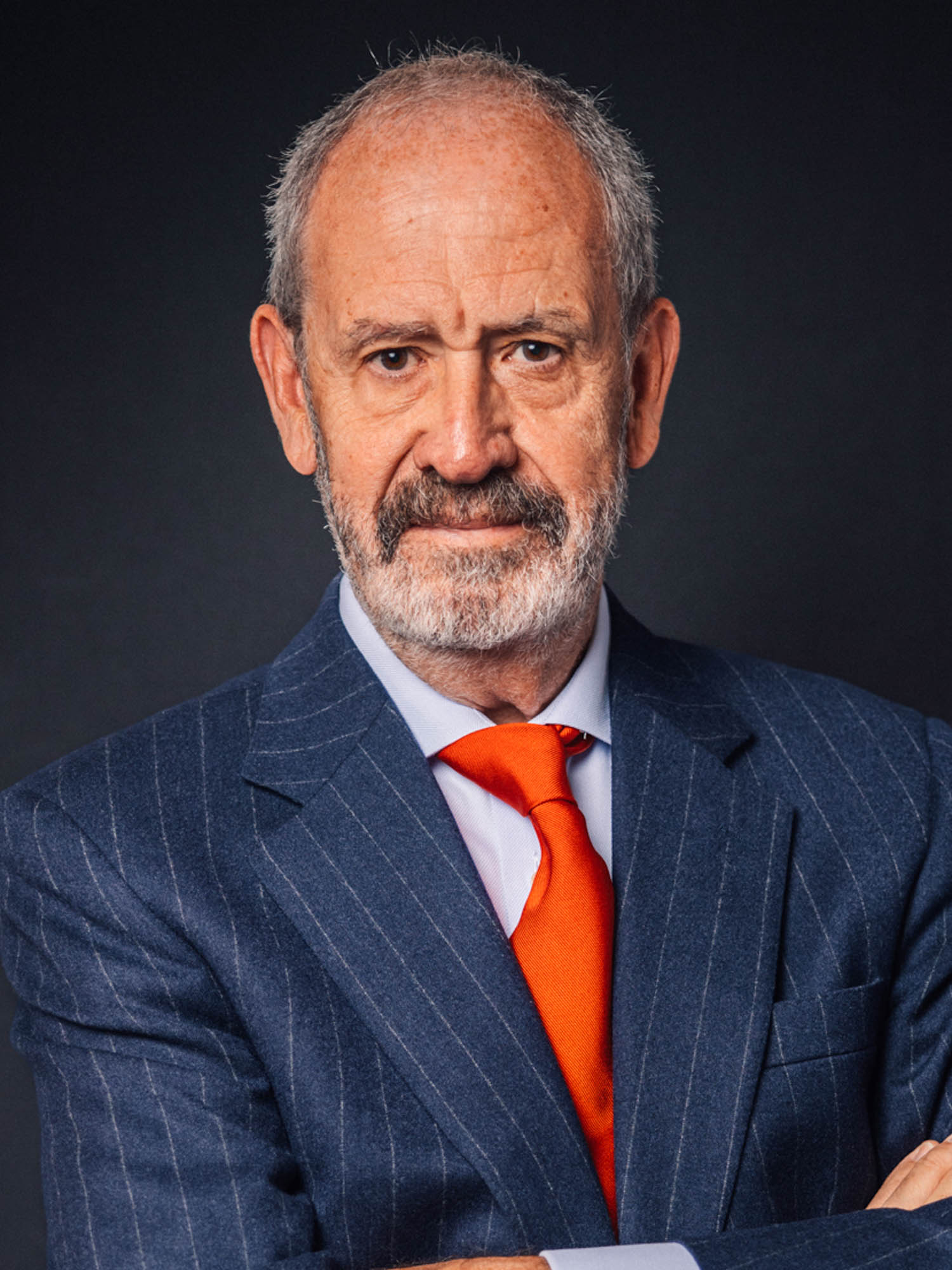
José Luis Marín López is a renowned Spanish psychiatrist and psychotherapist with over 40 years of experience. As the leader of the International Forum for Psychotherapy Training, he has been a key figure in the advancement of psychosomatic medicine and psychotherapy in Spain and internationally. His integrative and evidence-based approach has transformed therapeutic practice, emphasizing the mind-body connection and the social determinants of mental health.
Professionals who have already trained with us.
Psychologists, psychiatrists and psychotherapists applying what they have learned in their practice.
"Highly recommended!"
"I started the master's with this course and it seems to me an excellent way to introduce oneself to brief psychotherapy, very well explained and very complete in every sense. Truly great!"
"This course has provided me with a much deeper understanding of psychotherapy. I especially value the diversity of methodologies used for transmitting the concepts, such as slides, audiovisual material, specialized readings, and cinematographic references, which significantly..."
"I liked Jose Luis's very enthusiastic way of presenting the topics. There's a collaborator who seems to have less experience in on-camera communication, which is a point to note. Overall, I give the training an excellent mark regarding content and materials provided. This is..."
"A very enriching experience, with great classes taught by very good professionals, a real pleasure!"
"I loved the course! The material and content are high quality. Dr. Marín and his team are excellent professionals; their extensive experience is evident, and above all, their great sense of human warmth. Thank you very much for producing high-value educational material,..."
"I found it very enjoyable!"
"It has been a great course that has helped me to understand the course of brief psychotherapy in an informed, direct, and straightforward way."
"I found this course very enriching. I learned a lot."
"The course is pretty good for daily practice."
"I found this course very interesting. The content seems very appropriate to me, and I can also implement it in my daily practice. José Luis and Begoña are extraordinary teachers who know how to convey information very well. The course format is very good, as I've been able to..."
"I had never had access to such high-quality and relevant information! Always careful to give us all the sources so we can form our own experience. 100/100!"
"I liked it. The professor is very good at explaining. I would have liked the approach to be more holistic and less scientific, but I understand that it's training for psychologists and not so much for complementary therapists. Nevertheless, I enjoyed many of the topics and..."
"This course has filled me with satisfaction and hope for my patients. I'm a recently graduated psychologist, and honestly, I wasn't sure how to start approaching patient problems, but now it's become more than clear to me, and they've also provided me with the formats I can..."
"Thank you very much for the opportunity to provide this review. I am fascinated to have chosen this Master's and to be progressing module by module and course by course. I have never attended training so profound, practical, and meaningful, delivered with unparalleled human..."
"The course content is excellent."
"A great course. The quality of learning is excellent."
"Very good course, very good explanations, and Dr. Marín was very approachable in his explanations."
"Very happy with the content, I only miss a forum to resolve doubts and share with classmates, that's the only reason I don't give it 5 stars. Incredible all the complementary documentation and the suggestions for extra books and resources."
"It's a course that has accompanied me in my reflection process on professional practice. Watching the classes allowed me to pay full attention to the content and rewatch them as many times as needed. I felt as if Jose Luis was speaking specifically to me, which facilitated..."
"So satisfying! I was looking for a course that would give me structure for my clinical practice, and I certainly got what I was looking for. Thanks!"
"I found it very useful."
"I can only say that the course has been an incredible journey, accompanied mainly by Dr. Marín, as well as other professional colleagues who make the course a wonderful experience. I am enormously grateful for the work they are doing in training health professionals, as I..."
"An excellent choice! All sessions are informative, enjoyable, and rich in learning. The additional material is very valuable. I feel very motivated to continue until completing the master's degree. Thank you."
"This training has been a very valuable guide to understanding psychotherapeutic processes. Jose Luis is a wonderful communicator, approachable, kind, and direct. It has been a pleasure to take this course to add necessary knowledge to my practice as a therapist. Very complete..."
"Absolutely fantastic!"
"The course is magnificent in every way! The content is very precise and practical. The instructor is excellent. The material attached to each module is very comprehensive."
"I really enjoyed it and there are so many things I'm going to incorporate into my approach. So grateful!"
"I consider this course to be of immense value. I'm a clinical therapist, and even so, to feel that one can learn so much from resources like this is pure bliss!"
"It has truly been wonderful, nowhere I've studied before had I learned such valuable and useful content, I am extremely satisfied, with a hand on my heart and a peaceful smile accepting uncertainty, but with great confidence in what I have learned. Thank you very much!"
Endorsed by the leading institutions.
Institutional backing that matters for your CV, your career, and the validity of your continuing professional development.
Colegio Oficial de la Psicología de Madrid (COPM)
Federación de Asociaciones de Psicólogos y Médicos Psicoterapeutas de España (FAPYMPE)
Ilustre Colegio Oficial de Médicos de Madrid (ICOMEM)
SEMPyP (Sociedad Española de Medicina Psicosomática y Psicoterapia)
Diploma · Certified Expert Course in Brief Psychotherapy: Trauma-Informed and Attachment-Based Intervention
Awarded upon successful completion of all 9 modules of the programme
About the professional body seals on the diploma
To ensure specific professional body endorsement and in compliance with the regulations of these institutions, the inclusion of official professional association seals on the diploma is exclusive to students holding a degree in Medicine or Psychology. This distinction does not, however, affect the institutional endorsement of the programme's quality, ensuring that all our students, regardless of their degree, complete their training with qualifications whose excellence is fully recognised by these institutions.
Everything you need to know before enrolling.
If you have a question that does not appear here, write to us at info@psychotherapymasters.com and we will respond personally.
The course is 100% online with immediate access: as soon as you enrol you receive your virtual classroom credentials and can start straight away. There are no fixed start dates or mandatory schedule.
You have full access for 1 year to complete all 9 modules at your own pace. Most students complete it alongside their regular clinical work.
These are the requirements to access the course:
- No specific degree is required to take the courses.
- However, prior knowledge in the subject matter is recommended.
At the end of each module there is a multiple-choice self-assessment quiz. To obtain accreditation you must complete all modules answering at least 80% of questions correctly. You have 3 attempts per quiz.
Upon completing the course you will receive your diploma with 12 ECTS credits.
The price includes: full access for 1 year to all 38 video lessons, all supplementary course materials, the self-assessment quizzes for each module, and the accreditation diploma upon completing the programme.
You can also pay in instalments: from 144,39 US$/month over 6 payments.
Yes. If after enrolling the course is not what you expected, you have up to 14 days to request a full refund, in accordance with our withdrawal policy.
We also recommend watching the first class for free before enrolling, so you can assess the methodology with complete freedom.
Yes, we issue invoices in your name or in the name of a company/healthcare centre. For many professionals, the course is deductible as continuing education. If you need a specific invoice, please indicate this at the time of purchase.
Scholarships and solidarity access
Each edition we reserve a limited number of partial scholarships for professionals from Latin America, MIR/PIR residents, and psychotherapists who are unemployed. We believe that rigorous clinical knowledge cannot depend on your postcode.
Start today.
Immediate access.
No commitments. Access to the virtual classroom upon enrolment. And if you want to try it first, watch the first class for free.