
 Español
 Français
 Deutsch
 Italiano
 Português
Borderline Personality Disorder Course: Diagnosis, Understanding, and Therapeutic Approach
Stop treating the “difficult patient” and start reading their story.
“We are what we do with what others have made of us.”
— Jean-Paul Sartre

Stop treating the “difficult patient” and start reading their story.
“We are what we do with what others have made of us.”
— Jean-Paul Sartre
For decades, Borderline Personality Disorder has been one of the most frequent diagnostic labels in psychopathology, and also one of the most problematic. There is talk of difficult patients, resistant behaviors, and treatments that don't work. What is rarely asked is what lies behind the diagnosis, what story that person carries, what was done to them before they started doing what they do. Dr. José Luis Marín proposes exactly that question as the starting point of the course and as an indispensable condition for any genuine therapeutic approach.
It's not an illness, it's a wound
There are 256 ways to meet a BPD diagnosis, and none of them is the person in front of you. The program starts from an idea that Dr. Marín has defended with almost fifty years of clinical practice: what we call borderline disorder is not an illness, but the expression of early relational trauma, the imprint of what that person did with what was done to them. Understanding this is not a philosophical stance; it is the only condition that allows for real psychotherapy. The four sessions systematically build this argument:
- First, by deconstructing the concept and its diagnostic pretensions
- Then, by tracing the traumatic origin of clinical manifestations
- Finally, by proposing an approach oriented to the person, not the symptom.
The other axis: the difficult therapist
The second axis of the course is the therapist themselves, and Dr. Marín states it bluntly: the difficult patient does not exist; what exists is the difficult therapist. Those who work with people with this diagnosis face their own fears, their reactivity, and the limits of the therapeutic frame with an intensity that no other clinical profile provokes in the same way. The program does not avoid this debate; it places it at the center: it discusses the T factor, the therapist's personal style, countertransference, the limits of the frame, and why between 10 and 12% of patients in psychotherapy get worse, with the rigor of someone who has supervised and taught psychotherapy for forty years.
What you will learn in four sessions
- The concept, under scrutiny: where the term borderline comes from, its entry into the DSM in 1980, and why it functions as a catch-all.
- Diagnosis and its pitfalls: the criteria of the DSM-5-TR and how anchoring bias leads to constructing a distorted picture, reducing the person to five symptoms chosen from nine. It also anticipates the manual's shift towards a dimensional and transdiagnostic approach.
- The traumatic origin: the evidence linking BPD with early relational trauma.
- The approach: a three-part clinical framework, the keys to the therapeutic frame, the auxiliary self as a self-review tool, and the alliance as an active process of repair.
Extended training itinerary
This course is part of Dr. José Luis Marín's Expert Course in Personality Disorders. It can be taken autonomously as specific training in BPD or as a first step towards the complete training, as the paid price is fully discounted when acquiring the complete program. It is an access route to the universe of personality disorders from one of its most clinically challenging and conceptually most revealing territories.
For decades, access to the best psychotherapy training depended on mastering the language it was taught in. Not anymore. Thanks to artificial intelligence, at Psychotherapy Masters we have broken down the language barrier to bring you the leading international specialists in your own language.
It is a leap that until very recently was unthinkable, and we take it with the utmost rigour. We always start from our instructors' original work, and every video is translated with AI technology under human direction and reviewed by native specialists, who guarantee the clinical fidelity of every concept.
First-class training, without borders.
Questions about the programme? request information.
Request information with no obligation: we will answer your questions about the content, accreditation or payment options live.
A comprehensive programme, straight to the point.
4 video lessons, supplementary documentation and a module-level assessment. Click on each module to view the full detailed content.
How the course works.
A 100% online programme designed to combine independent study with opportunities for direct interaction.
Assessment and accreditation
At the end of each module there is a multiple-choice self-assessment. To obtain accreditation you must complete all modules achieving a score of at least 80%. You have 3 attempts per test. Upon completing the programme you receive an accredited diploma.
Just another course on psychological disorders?
Not all clinical training programmes are equal. Choose clinical rigour over generic content or theory disconnected from practice.
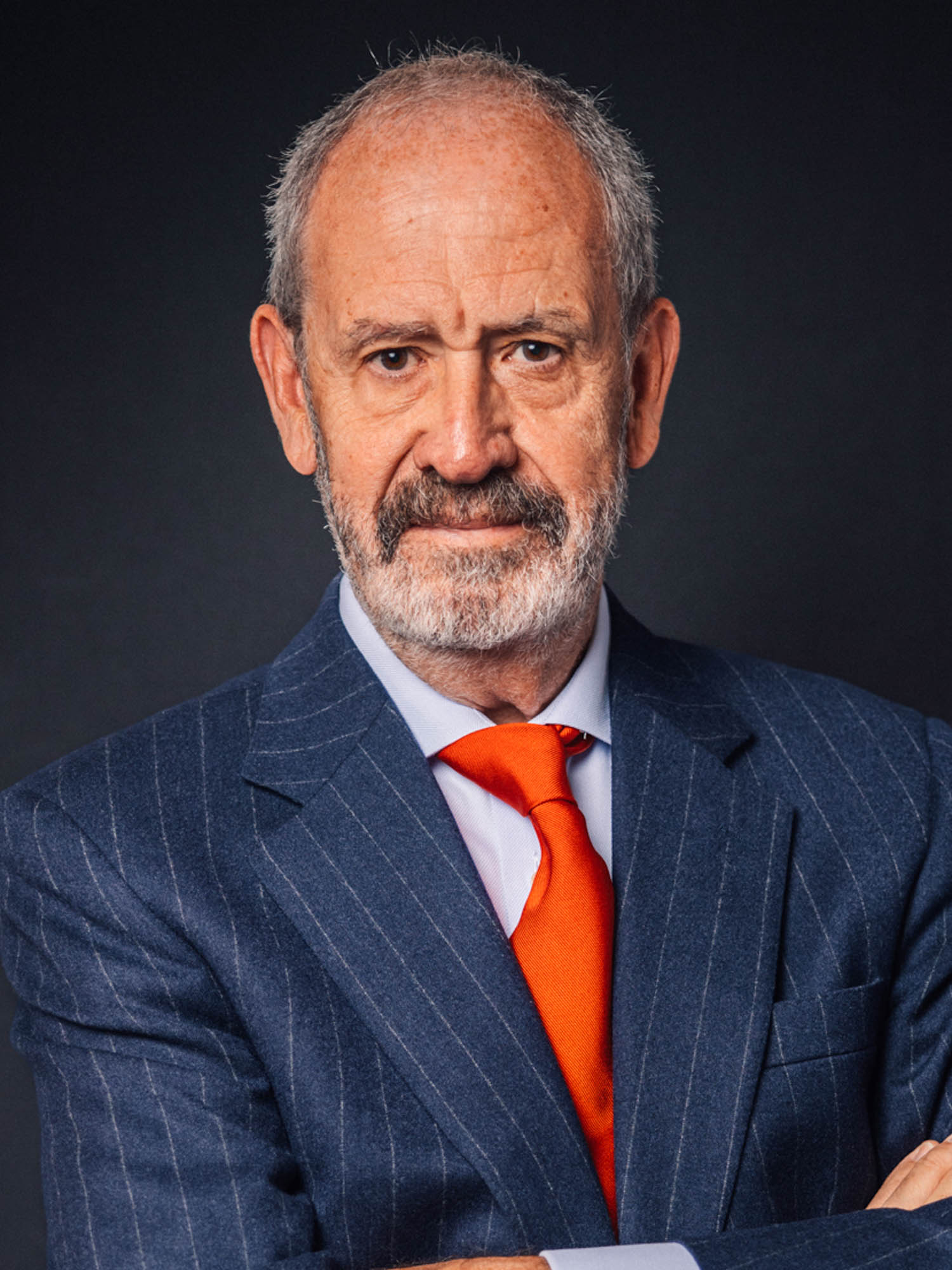
José Luis Marín López is a renowned Spanish psychiatrist and psychotherapist with over 40 years of experience. As the leader of the International Forum for Psychotherapy Training, he has been a key figure in the advancement of psychosomatic medicine and psychotherapy in Spain and internationally. His integrative and evidence-based approach has transformed therapeutic practice, emphasizing the mind-body connection and the social determinants of mental health.
Professionals who have already trained with us.
Psychologists, psychiatrists and psychotherapists applying what they have learned in their practice.
"I find this course very interesting and suitable, both for the approach and the documentation provided. Many thanks."
Endorsed by the leading institutions.
Institutional backing that matters for your CV, your career, and the validity of your continuing professional development.
Colegio Oficial de la Psicología de Madrid (COPM)
Federación de Asociaciones de Psicólogos y Médicos Psicoterapeutas de España (FAPYMPE)
Ilustre Colegio Oficial de Médicos de Madrid (ICOMEM)
SEMPyP (Sociedad Española de Medicina Psicosomática y Psicoterapia)
Diploma · Borderline Personality Disorder Course: Diagnosis, Understanding, and Therapeutic Approach
Awarded upon successful completion of the full programme
About the professional body seals on the diploma
To ensure specific professional body endorsement and in compliance with the regulations of these institutions, the inclusion of official professional association seals on the diploma is exclusive to students holding a degree in Medicine or Psychology. This distinction does not, however, affect the institutional endorsement of the programme's quality, ensuring that all our students, regardless of their degree, complete their training with qualifications whose excellence is fully recognised by these institutions.
Everything you need to know before enrolling.
If you have a question that does not appear here, write to us at info@psychotherapymasters.com and we will respond personally.
The course is 100% online with immediate access: as soon as you enrol you receive your virtual classroom credentials and can start straight away. There are no fixed start dates or mandatory schedule.
You have full access for 1 year to complete the programme at your own pace. Most students complete it alongside their regular clinical work.
These are the requirements to access the course:
- No degree is required to take the courses.
- However, prior knowledge in the subject matter is recommended.
At the end of each module there is a multiple-choice self-assessment quiz. To obtain accreditation you must complete all modules answering at least 80% of questions correctly. You have 3 attempts per quiz.
Upon completing the course you will receive your diploma.
The price includes: full access for 1 year to all 4 video lessons, all supplementary course materials, the self-assessment quizzes for each module, and the accreditation diploma upon completing the programme.
You can also pay in instalments: from 56,02 US$/month over 2 payments.
Yes. If after enrolling the course is not what you expected, you have up to 14 days to request a full refund, in accordance with our withdrawal policy.
Yes, we issue invoices in your name or in the name of a company/healthcare centre. For many professionals, the course is deductible as continuing education. If you need a specific invoice, please indicate this at the time of purchase.
Scholarships and solidarity access
Each edition we reserve a limited number of partial scholarships for professionals from Latin America, MIR/PIR residents, and psychotherapists who are unemployed. We believe that rigorous clinical knowledge cannot depend on your postcode.
Start today.
Immediate access.
No commitments. Access to the virtual classroom upon enrolment.