
 Español
 Français
 Deutsch
 Italiano
 Português
Course in Relational Psychotherapy with Children and Families.
A way of thinking about children's distress that does not begin with a diagnosis.
«Psychiatric diagnoses are facts of culture, not facts of nature.»
— Sami Timimi

A way of thinking about children's distress that does not begin with a diagnosis.
«Psychiatric diagnoses are facts of culture, not facts of nature.»
— Sami Timimi
What diagnosis fails to label: a relational and contextual approach to clinical work with children and families
For decades we have used psychiatric diagnoses as though they were facts of nature. As though in saying ADHD, conduct disorder or anxiety disorder we were naming something that exists independently of who defines it, which culture frames it and which economic system benefits from it. Sami Timimi, a British child and adolescent psychiatrist with more than thirty years of clinical practice and over a hundred and fifty scientific publications, has spent those same decades arguing that psychiatric diagnoses are cultural constructions, not natural entities, and that mistaking them for objective truths has real clinical consequences for the people we see.
This course proposes an alternative. Instead of diagnoses, frameworks of meaning. Instead of individual pathologies, emotional flows within relationships. Instead of symptom-focused intervention, practice oriented towards context and development. The programme rests on two principles Timimi has held throughout his career: everything we call a mental health problem can only be understood in its context, and the only constant in human development is change. From those two principles it builds a repertoire of conceptual and clinical tools for working with children, young people and their families in a genuinely holistic way.
The programme runs along two axes. The first is theoretical: a critical analysis of the assumptions underlying mainstream psychiatry, a model of emotions as motivated energy that creates connection in relationships, and a dialectical understanding of therapeutic change that makes it possible to work with what the problem does in the relationship before attempting to resolve it. The second is practical: how to structure a first session with a family, how to read the family script and the emotional dance that sustains it, and how to facilitate the Relational Awareness Programme (RAP), a four-session group programme for parents and carers that Timimi developed in the child mental health services where he worked.
It is not a course about how to apply a protocol. It is a course about how to think, and the difference between those two things is precisely what Timimi has spent his career trying to explain. Although it is oriented towards professionals working with children and young people, most of the principles it develops apply directly to work with adults.
What you will learn
- Examine what we mean by mental health, and why every available definition is a subjective one.
- Understand psychiatric diagnoses as cultural descriptions rather than causal classifications.
- Recognise the models of human nature, childhood and family life that underlie any therapeutic intervention.
- Work with emotions as motivated energy and with the emotional flow that occurs between people.
- Structure a first family meeting so that alternative stories can emerge alongside the story of the problem.
- Facilitate a RAP group with parents and carers, and adapt the model to your own setting.
Questions about the programme? request information.
Request information with no obligation: we will answer your questions about the content, accreditation or payment options live.
A comprehensive programme across 3 modules.
15 video lessons, supplementary documentation and a module-level assessment. Click on each module to view the full detailed content.
The first module establishes the conceptual basis of the programme across six lessons that dismantle some of the most entrenched assumptions of contemporary clinical practice. It begins by examining what we understand by mental health and why every available definition is subjective, which leads to a reconsideration of psychiatric diagnoses as cultural descriptions rather than causal classifications. From there the module addresses the models of human nature, childhood and family life that underlie any therapeutic intervention, analysing how these models are shaped by history, economics and culture more than by evidence. The second half of the module sets out the alternative conceptual framework: a model of emotions as motivated energy that creates connection in relationships, a dialectical reading of the therapeutic process that understands change as something occurring in steps, and an analysis of treatment traps, which explains how a problem can feed back on itself and be amplified when the framework of meaning in use does not work.
The second module carries the conceptual foundations into the clinical encounter. The first lesson examines how emotional flow operates within the family system, introducing the family script as the pattern that organises relationships and that can exert an unconscious pressure to return to the old dance even once change has begun. It also considers the influence of the system beyond the family: how the presence of multiple professionals can interfere with that emotional flow, and what working in a coordinated way from this approach involves. The two remaining lessons offer concrete models for structuring clinical work: how to set up a first meeting with a family so that alternative stories can emerge alongside the story of the problem, and how to decide whether an intervention should be brief or extended, with clear criteria for both.
The third module presents the Relational Awareness Programme, a four-session group programme developed by Timimi and his colleagues in child and adolescent mental health services, for work with parents and carers who are struggling with children and young people who worry, frustrate or stress them. The module opens with a lesson on how to organise and set up a group of this kind, with guidance on referral, structure, materials and the management of the group's emotional tone. The four sessions of the programme are then developed: the philosophy and principles of the relational approach; the energy of desired behaviours and the work with rules and boundaries from the nurturing of the relationship; metaphors for handling emotional intensity and activating the parasympathetic response; and the closing session, aimed at consolidating what has been learned, looking to the future and strengthening the resilience the participants have themselves developed. The module ends with a review of the whole programme that serves as a map for anyone wishing to adapt this model to their own setting.
How the course works.
A 100% online programme designed to combine independent study with opportunities for direct interaction.
Assessment and accreditation
At the end of each module there is a multiple-choice self-assessment. To obtain accreditation you must complete all modules achieving a score of at least 80%. You have 3 attempts per test. Upon completing the programme you receive an accredited diploma.
Just another course on psychopathology and psychiatry?
Not all clinical training programmes are equal. Choose clinical rigour over generic content or theory disconnected from practice.
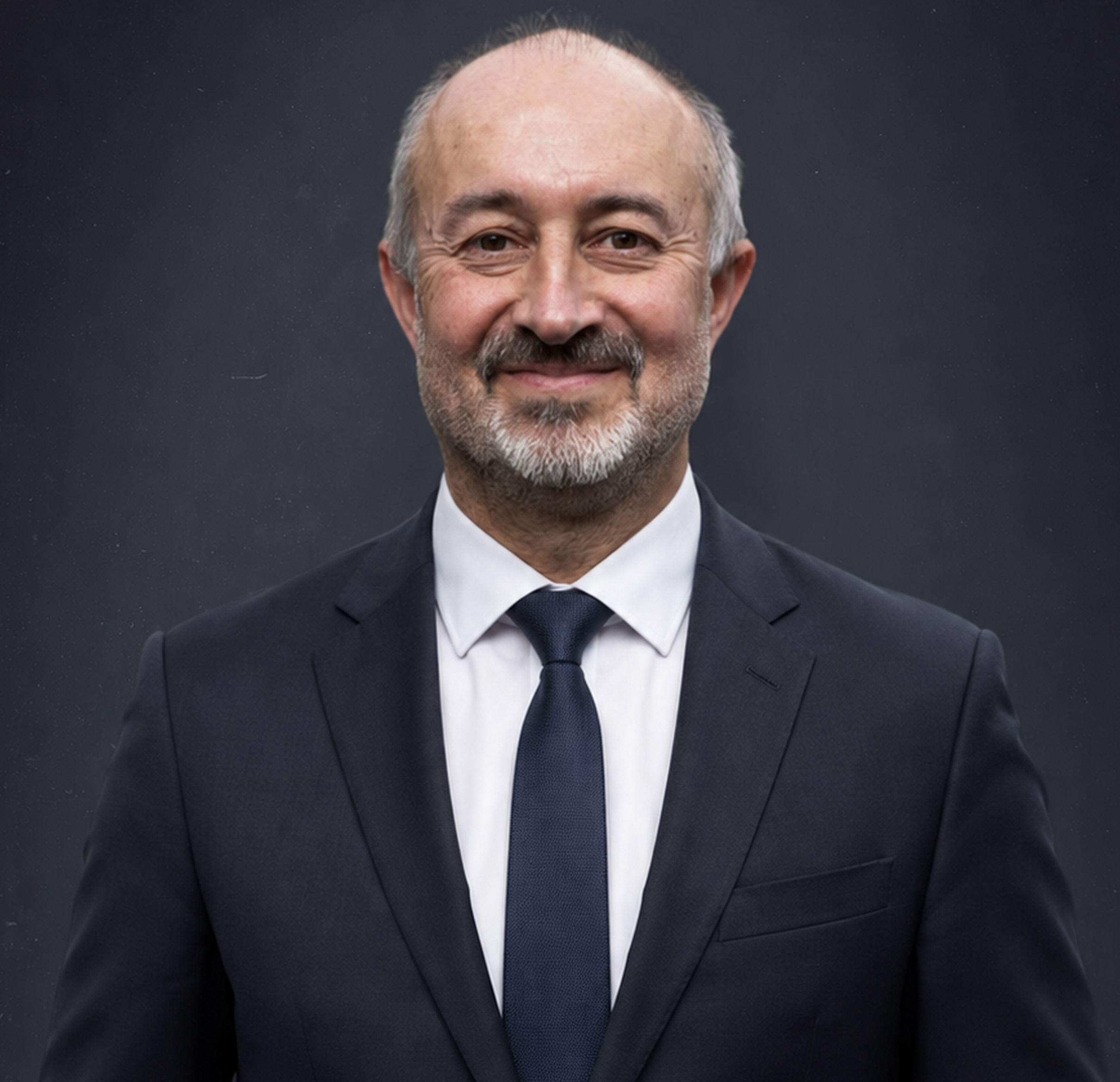
Sami Timimi is a British child and adolescent psychiatrist, psychotherapist and author, now retired from clinical practice after more than thirty years in the National Health Service. He qualified in medicine at the University of Dundee in 1988, became a Member of the Royal College of Psychiatrists in 1992 and a Fellow of the College in 2012. Writing from a critical psychiatry perspective, he has published over a hundred and fifty scientific articles and dozens of book chapters on childhood, psychotherapy, behavioural problems and cross-cultural psychiatry, and is the developer, with his colleagues, of the Relational Awareness Programme, a group model for parents and carers built on the premise that distress can only be understood in its relational context.
Endorsed by the leading institutions.
Institutional backing that matters for your CV, your career, and the validity of your continuing professional development.
Colegio Oficial de la Psicología de Madrid (COPM)
Federación de Asociaciones de Psicólogos y Médicos Psicoterapeutas de España (FAPYMPE)
Ilustre Colegio Oficial de Médicos de Madrid (ICOMEM)
SEMPyP (Sociedad Española de Medicina Psicosomática y Psicoterapia)
Diploma · Course in Relational Psychotherapy with Children and Families.
Awarded upon successful completion of all 3 modules of the programme
About the professional body seals on the diploma
To ensure specific professional body endorsement and in compliance with the regulations of these institutions, the inclusion of official professional association seals on the diploma is exclusive to students holding a degree in Medicine or Psychology. This distinction does not, however, affect the institutional endorsement of the programme's quality, ensuring that all our students, regardless of their degree, complete their training with qualifications whose excellence is fully recognised by these institutions.
Everything you need to know before enrolling.
If you have a question that does not appear here, write to us at info@psychotherapymasters.com and we will respond personally.
The course is 100% online with immediate access: as soon as you enrol you receive your virtual classroom credentials and can start straight away. There are no fixed start dates or mandatory schedule.
You have full access for 1 year to complete all 3 modules at your own pace. Most students complete it alongside their regular clinical work.
At the end of each module there is a multiple-choice self-assessment quiz. To obtain accreditation you must complete all modules answering at least 80% of questions correctly. You have 3 attempts per quiz.
Upon completing the course you will receive your diploma.
The price includes: full access for 1 year to all 15 video lessons, all supplementary course materials, the self-assessment quizzes for each module, and the accreditation diploma upon completing the programme.
Yes. If after enrolling the course is not what you expected, you have up to 14 days to request a full refund, in accordance with our withdrawal policy.
Yes, we issue invoices in your name or in the name of a company/healthcare centre. For many professionals, the course is deductible as continuing education. If you need a specific invoice, please indicate this at the time of purchase.
Scholarships and solidarity access
Each edition we reserve a limited number of partial scholarships for professionals from Latin America, MIR/PIR residents, and psychotherapists who are unemployed. We believe that rigorous clinical knowledge cannot depend on your postcode.
Start today.
Immediate access.
No commitments. Access to the virtual classroom upon enrolment.