
 Español
 Français
 Deutsch
 Italiano
 Português
Course in Multigenerational Family Therapy
Learn to bring three generations into the room and let the child guide you into the family's history
«Action is the main door to knowledge. Insight comes after.»
— Maurizio Andolfi


Learn to bring three generations into the room and let the child guide you into the family's history
«Action is the main door to knowledge. Insight comes after.»
— Maurizio Andolfi
A family arrives because an eight-year-old has been labelled with ADHD. Most of the profession will now work to reduce the label. Maurizio Andolfi does something else: he treats the child's symptom as the occasion, not the target, and uses it as the door into a family history where a grandfather died and was never mourned, where one branch has been cut off for years, and where the couple has been quietly carrying all of it.
Multigenerational Family Therapy grew out of the pioneers of the field and departs from them on one decisive point. Bateson brought the context, Bowen the differentiation of self, Boszormenyi-Nagy the invisible loyalties, Framo the family of origin session, Minuchin the structure and its boundaries, Satir and Whitaker the experiential encounter. What almost all of them left out was the child. Andolfi reversed the direction of the inquiry and made the child the guide.
The course is built on real clinical material recorded in Italy, Australia, China, the Netherlands and the Dominican Republic, alongside training footage in which therapists work on their own family history. It is designed for family therapists, psychotherapists, psychologists, psychiatrists, social workers and counsellors working with children, adolescents, couples and families, and for those responsible for training them. No previous systemic training is required, but the course assumes clinical practice: what it offers is a way of seeing and a set of tools for the next family who walks in.
What this course covers
- Look at any presenting problem, in a child, an adolescent, a couple or an adult, within a three-generational frame.
- Engage the members who never arrive on their own, in particular fathers, siblings and grandparents.
- Use the family genogram as a living, therapeutic instrument rather than an intake form.
- Reframe symptoms as relational events and convert them into resources for the whole family.
- Work experientially, using space, movement, objects and the body, not conversation alone.
- Recognise the therapist's own family history at work in the session.
The three-floor house
The organising image of the method is a house with three floors: children, parents, grandparents. A family is never the two generations who happen to be sitting in front of the therapist; that is one slice of the cake. Most of what looks inexplicable on one floor becomes legible when the floor above is brought into view. A couple's chronic tension acquires an explanation upstairs, and a child's symptom appears exactly where an unfinished loss has been left unattended.
The bottom-up approach
Andolfi's central contribution is to reverse the usual direction of inquiry, working upwards from the children, who have witnessed family life and answer intergenerational questions with a directness adults rarely manage. The child draws the genogram, awards stars to family members, calls the aunt on the telephone, and becomes a co-therapist. The consequence is twofold: the family reaches material it could not reach directly, and a child who came in as the problem leaves feeling competent.
Where the method is tested
Three lessons take the approach into the situations clinicians find hardest. Adolescence is presented through ten key points, including the argument that it is not a stage of autonomy and that much adolescent disturbance rests on a failure of belonging rather than a failure to separate. Couple work is presented as intergenerational couple therapy, assessed through the we-ness of the couple, each partner's differentiation from their family of origin and the social level of friends and community. A further lesson is devoted to fathers as the missing presence in families and in therapy alike, absent even from attachment theory, and to how to engage them: never through the wife, always through the child.
The use of self
The final lesson turns the method on the therapist. Working without a desk in between means objectivity is an illusion and everything happens at the level of intersubjectivity. It covers the therapist's inner family always seated in the room, the shift from an external supervisor to an inner one, therapeutic silence, self-disclosure, and the professional handicaps work Andolfi has run for thirty-eight years.
Questions about the programme? request information.
Request information with no obligation: we will answer your questions about the content, accreditation or payment options live.
A comprehensive programme, straight to the point.
8 video lessons, supplementary documentation and a module-level assessment. Click on each module to view the full detailed content.
A single module built as a continuous itinerary, from the foundations of the method to its application with children, adolescents, couples and fathers, and finally to the training of the therapist.
How the course works.
A 100% online programme designed to combine independent study with opportunities for direct interaction.
Assessment and accreditation
At the end of each module there is a multiple-choice self-assessment. To obtain accreditation you must complete all modules achieving a score of at least 80%. You have 3 attempts per test. Upon completing the programme you receive an accredited diploma.
Just another course on clinical interventions?
Not all clinical training programmes are equal. Choose clinical rigour over generic content or theory disconnected from practice.
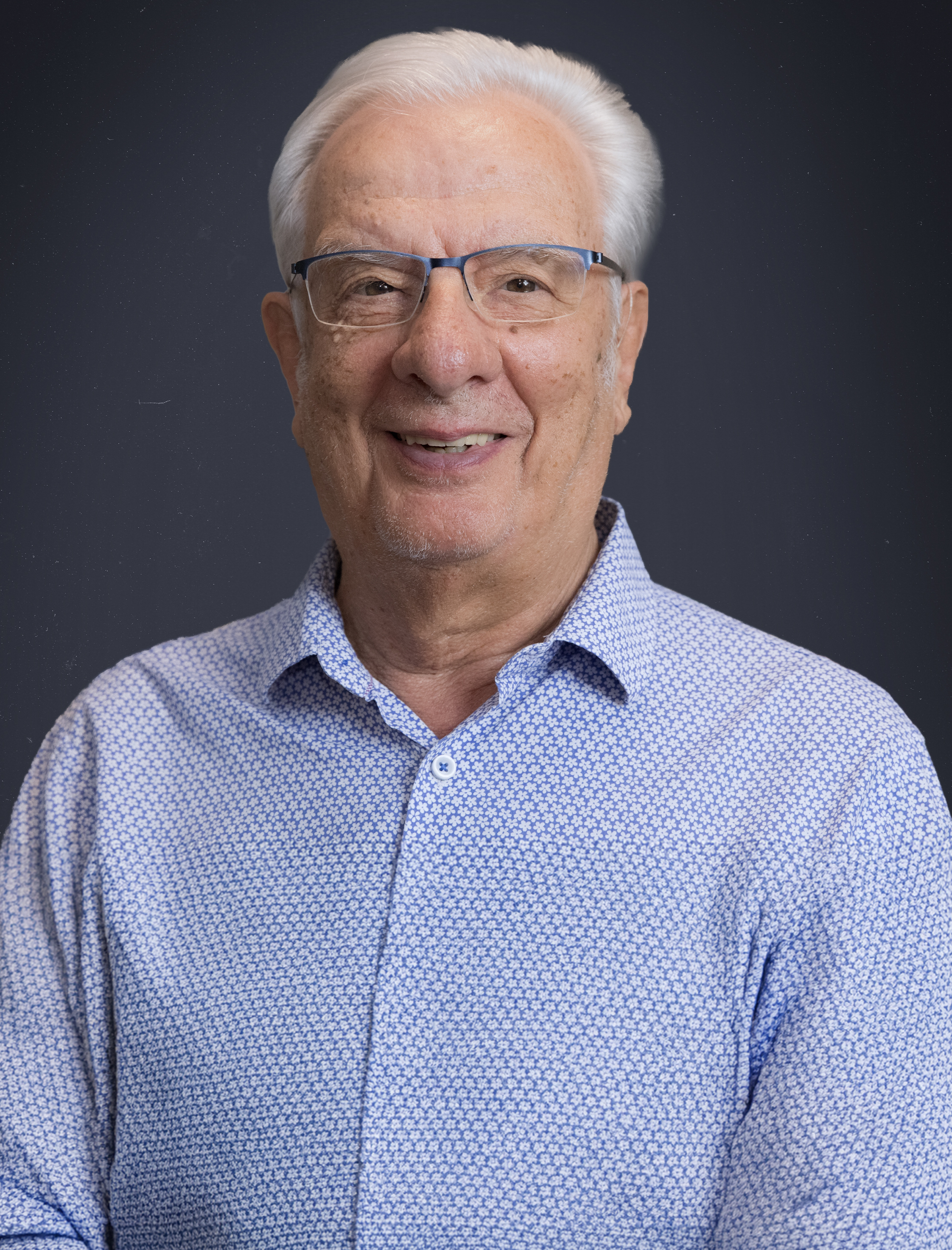
Maurizio Andolfi is an Italian child psychiatrist and family therapist, and one of the most influential figures in the international development of systemic family therapy. Trained in New York and Philadelphia alongside the founders of the field, he went on to develop his own model, the multigenerational family therapy approach, which places the child as the guide to the family system and works with three generations in the room. He is Director of the Family Therapy Academy in Rome, President of the Silvano Andolfi Foundation and Editor-in-Chief of the journal Terapia Familiare, and has consulted with families and trained clinicians across five continents for more than four decades.
Endorsed by the leading institutions.
Institutional backing that matters for your CV, your career, and the validity of your continuing professional development.
Colegio Oficial de la Psicología de Madrid (COPM)
Federación de Asociaciones de Psicólogos y Médicos Psicoterapeutas de España (FAPYMPE)
Ilustre Colegio Oficial de Médicos de Madrid (ICOMEM)
SEMPyP (Sociedad Española de Medicina Psicosomática y Psicoterapia)
Diploma · Course in Multigenerational Family Therapy
Awarded upon successful completion of the full programme
About the professional body seals on the diploma
To ensure specific professional body endorsement and in compliance with the regulations of these institutions, the inclusion of official professional association seals on the diploma is exclusive to students holding a degree in Medicine or Psychology. This distinction does not, however, affect the institutional endorsement of the programme's quality, ensuring that all our students, regardless of their degree, complete their training with qualifications whose excellence is fully recognised by these institutions.
Everything you need to know before enrolling.
If you have a question that does not appear here, write to us at info@psychotherapymasters.com and we will respond personally.
The course is 100% online with immediate access: as soon as you enrol you receive your virtual classroom credentials and can start straight away. There are no fixed start dates or mandatory schedule.
You have full access for 1 year to complete the programme at your own pace. Most students complete it alongside their regular clinical work.
At the end of each module there is a multiple-choice self-assessment quiz. To obtain accreditation you must complete all modules answering at least 80% of questions correctly. You have 3 attempts per quiz.
Upon completing the course you will receive your diploma.
The price includes: full access for 1 year to all 8 video lessons, all supplementary course materials, the self-assessment quizzes for each module, and the accreditation diploma upon completing the programme.
Yes. If after enrolling the course is not what you expected, you have up to 14 days to request a full refund, in accordance with our withdrawal policy.
Yes, we issue invoices in your name or in the name of a company/healthcare centre. For many professionals, the course is deductible as continuing education. If you need a specific invoice, please indicate this at the time of purchase.
Scholarships and solidarity access
Each edition we reserve a limited number of partial scholarships for professionals from Latin America, MIR/PIR residents, and psychotherapists who are unemployed. We believe that rigorous clinical knowledge cannot depend on your postcode.
Start today.
Immediate access.
No commitments. Access to the virtual classroom upon enrolment.