Borderline Personality Disorder Course: Diagnosis, Understanding, and Therapeutic Approach
«We are what we do with what others have made of us.» — Jean-Paul Sartre
The difficult patient does not exist: rethinking BPD from relational trauma, attachment, and history.


«We are what we do with what others have made of us.» — Jean-Paul Sartre The difficult patient does not exist: rethinking BPD from relational trauma, attachment, and history.
«Somos lo que hacemos con lo que hicieron de nosotros.»
— Jean-Paul Sartre
For decades, Borderline Personality Disorder (BPD) has been one of the most frequent diagnostic labels in psychopathology, and also one of the most problematic. There is talk of difficult patients, of resistant behaviors, of treatments that don't work. What is rarely asked is what lies behind the diagnosis, what history that person carries, what was done to them before they started doing what they do. Dr. José Luis Marín proposes precisely that question as the starting point of this course and as an indispensable condition for any genuine therapeutic approach.
There are 256 possible ways to meet a BPD diagnosis, and none of them is the person in front of you. This program starts from an idea that Dr. Marín has defended with almost fifty years of clinical practice: what we call borderline disorder is not an illness, but the expression of early relational trauma, the imprint of what that person did with what was done to them. Understanding this is not a philosophical stance: it is the only condition that allows for real psychotherapy with this patient profile.
The first session opens with a question that seems obvious but isn't: is the BPD diagnosis really useful for anything?. You will explore the history of the term, from its Anglo-Saxon origins as borderline, its entry into the DSM in 1980 and its subsequent evolution, to a conclusion that Dr. Marín defends with data: it is a catch-all category, not a valid clinical category. You will work on the different terminological alternatives proposed by the international clinical community:
- Linehan's Emotional Dysregulation Disorder
- Karolín's Post-traumatic Personality Disorganization
- The British Psychological Society's Complex Emotional Needs
You will understand why what we see in these patients is the manifestation of a wound, not a mental illness.
The second session examines the diagnosis as it is used today. You will review the DSM-5-TR criteria —impulsivity, emotional lability, fear of abandonment, chronic feelings of emptiness, dichotomous thinking— and see how diagnostic anchoring bias leads professionals to construct a distorted picture, reducing the person to five symptoms chosen from nine possibilities and ignoring everything else. You will learn to read the current debate on the scientific validity of the diagnosis, become familiar with the imminent transformation of the DSM towards a dimensional and transdiagnostic approach, and consider the clinical alternative that Marín proposes from his practice: seeing the complete clinical picture instead of counting isolated symptoms.
The third session is where the course reveals its full explanatory power. Here, evidence linking the BPD diagnosis with early relational trauma is presented: childhood sexual abuse and its correlation with borderline pathology in adolescence, the impact of maternal depression on parenting, the broken socio-emotional bond that leaves a lifelong mark into adulthood. A precise distinction is made between Type 1 trauma and complex trauma, and Alan Schore's concept of early relational trauma is introduced as the explanatory thread for manifestations that the DSM merely labels.
The fourth session is the most practical and honest: a working manual for the therapist who works —or wants to work— with this profile. Here appears the formulation that underpins the entire course and which Dr. Marín states bluntly: the difficult patient does not exist; what exists is the difficult therapist. Those of us who work with people with this diagnosis confront our own fears, our reactivity, and our frame limitations with an intensity that no other clinical profile provokes in the same way.
The program does not avoid this debate; it places it at the center. A three-part clinical framework is developed:
- What has happened to the patient
- What happens to us
- What happens to the system
This framework gives the therapist a concrete map to sustain themselves in sessions that so often become overwhelming. The keys to the therapeutic frame with this profile are worked on in detail, as well as the value of Pavlovsky's auxiliary ego as a self-revision tool, and the construction of the therapeutic alliance as an active process of repair in the relationship —because for this patient profile, the alliance is not the means, it is a significant part of the treatment—.
The module also honestly reviews the main evidence-based interventions available —EMDR, mentalization-based therapy (MBT), schema therapy, DBT— and concludes with a fact that few courses dare to mention: between 10 and 12% of psychotherapy patients leave worse off, and working well with BPD begins precisely by not being part of that percentage. All of this with the rigor of someone who has supervised and taught psychotherapy for forty years and with the frankness of someone who no longer has anything to prove.
The phrase that concludes the course summarizes its proposal: there is no psychotherapy for the diagnosis, there is psychotherapy for life.
This course is part of Dr. José Luis Marín's Certified Expert Course in Personality Disorders. It can be taken independently as specific training in BPD or as a first step towards the complete training, as the amount paid is fully discounted when acquiring the complete program.
¿Dudas sobre el programa? Habla con un asesor.
Agenda una llamada gratuita y sin compromiso: resolvemos en directo tus dudas sobre el contenido, la acreditación o las formas de pago.
Un programa completo, directo al grano.
4 clases en vídeo, documentación complementaria y evaluación por módulo. Haz clic en cada módulo para ver todo el contenido detallado.
Cómo funciona el curso.
Un programa 100% online diseñado para combinar estudio autónomo con momentos de interacción directa.
Evaluación y acreditación
Al final de cada módulo hay una autoevaluación tipo test. Para obtener la acreditación hay que completar todos los módulos superando el 80% de aciertos. Dispones de 3 intentos por test. Al superar el programa obtienes el diploma acreditativo.
¿Otro curso más de psychological disorders?
No todas las formaciones clínicas son iguales. Elige el rigor clínico sobre la divulgación genérica o la teoría desconectada de la consulta.
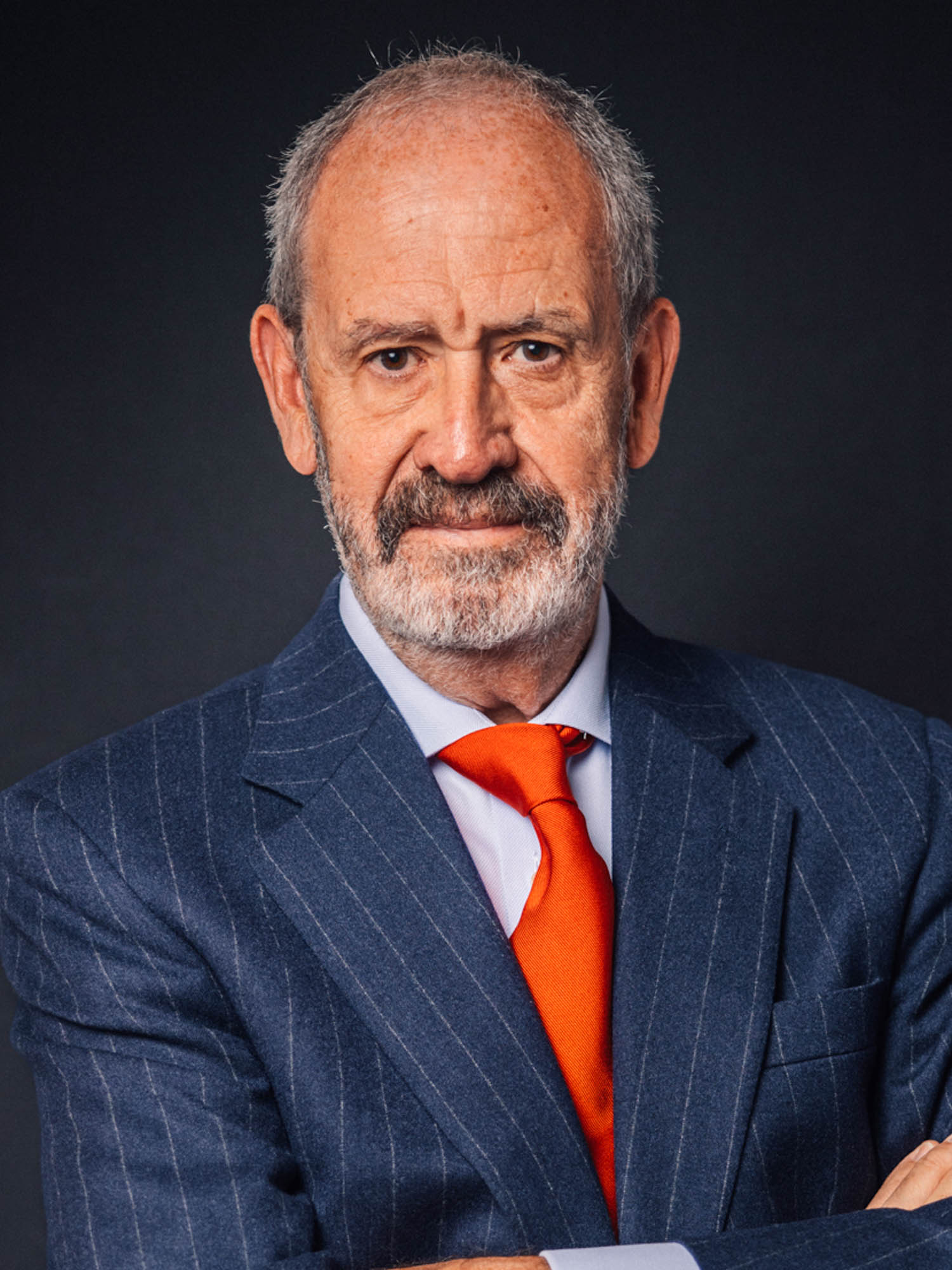
José Luis Marín López is a renowned psychiatrist and psychotherapist from Spain with over 40 years of experience. As the leader of the International Forum for Training in Psychotherapy, he has been a key figure in advancing psychosomatic medicine and psychotherapy in Spain and internationally. His integrative and evidence-based approach has transformed therapeutic practice, emphasizing the mind-body relationship and the social determinants of mental health.
Profesionales que ya se han formado.
Psicólogos, psiquiatras y psicoterapeutas que aplican lo aprendido en su consulta.
"Excelente curso, ha cumplido ampliamente mis expectativas."
"Si, es una formación interesante, muy completa y práctica. Recomendable 100%"
"A pesar de que inicié el curso con una expectativa alta, me emociona y admira cómo se puede aprender tanto en un curso tan breve. Y no solo como conocimiento intelectual, que por supuesto, también por la comprensión de una forma de relación terapéutica más consciente y..."
"este curso es muy recomendable para todos los profesionales del sector salud, lo dicta el Dr, Jose Luis Marin y con su generosidad nos transmite años de experiencia psicoterapéutica, estoy muy agradecido de poder escucharlo y seguir aprendiendo"
"I find this course very interesting and suitable, both for the approach and the documentation provided. Many thanks."
"Me parece un curso muy interesante y adecuado tanto por el abordaje como por la documentación aportada. Muchas gracias."
Avalado por las principales instituciones.
Un respaldo institucional que importa para tu currículum, tu carrera y la validez de tu formación continuada.
Colegio Oficial de la Psicología de Madrid (COPM)
Federación de Asociaciones de Psicólogos y Médicos Psicoterapeutas de España (FAPYMPE)
Ilustre Colegio Oficial de Médicos de Madrid (ICOMEM)
SEMPyP (Sociedad Española de Medicina Psicosomática y Psicoterapia)
Diploma · Borderline Personality Disorder Course: Diagnosis, Understanding, and Therapeutic Approach
Expedido tras superar la evaluación del programa completo
Sobre los sellos colegiales del diploma
Para garantizar un respaldo colegial específico y en cumplimiento con la normativa de estas instituciones, la inclusión de los sellos oficiales de los colegios profesionales en el diploma es exclusiva para aquellos alumnos titulados en las áreas de Medicina o Psicología. No obstante, esta distinción no altera el aval institucional a la calidad del programa, garantizando que todos nuestros alumnos, independientemente de su titulación, egresen con una formación cuya excelencia está plenamente reconocida por estas instituciones.
Todo lo que necesitas saber antes de inscribirte.
Si tienes alguna pregunta que no aparezca aquí, escríbenos a info@psychotherapymasters.com y te responderemos personalmente.
El curso es 100% online y de acceso inmediato: en cuanto te inscribes recibes las credenciales del aula virtual y puedes empezar. No hay fechas fijas de inicio ni calendario obligatorio.
Tienes acceso completo durante 1 año para completar el programa a tu ritmo. La mayoría de alumnos lo completan combinándolo con su actividad clínica habitual.
Estos son los requisitos para acceder al curso:
- No degree is required to take the courses.
- However, prior knowledge in the subject matter is recommended.
Al final de cada módulo hay una autoevaluación tipo test con preguntas de opción múltiple. Para obtener la acreditación debes completar todos los módulos respondiendo correctamente al menos al 80% de las preguntas. Dispones de 3 intentos por test.
Al superar el curso recibes el diploma.
El precio incluye: acceso completo durante 1 año a las 4 clases en vídeo, toda la documentación complementaria del curso, las autoevaluaciones de cada módulo y el diploma acreditativo al completar el programa.
También puedes pagar a plazos: desde 55,83 US$/mes en 2 cuotas.
Sí. Si tras inscribirte el curso no es lo que esperabas, tienes hasta 14 días para solicitar la devolución íntegra del importe, según nuestra política de desistimiento.
Sí, emitimos factura a nombre propio o de empresa/centro sanitario. Para muchos profesionales el curso es deducible como formación continuada. Si necesitas factura específica, indícalo en el momento de la compra.
Becas y acceso solidario
Cada edición reservamos un número limitado de becas parciales para profesionales de Latinoamérica, residentes MIR/PIR y psicoterapeutas en situación de desempleo. Creemos que el conocimiento clínico riguroso no puede depender del código postal.
Empieza hoy.
Acceso inmediato.
Sin compromisos. Acceso al aula virtual tras la inscripción.