Certified Expert Course in Clinical Psychopharmacology
«Psychopharmaceuticals are a resource, never an end.» — Dr. José Luis Marín
Prescribing with purpose: a clinical, critical, and integrative psychopharmacology.


Antes de inscribirte, mira la primera clase.
Sin formularios, sin registros. Comprueba de primera mano la metodología de José Luis Marín y decide con criterio. What are the classes like?, abierta a todo el mundo.
Inscribirme al curso completo«Psychopharmaceuticals are a resource, never an end.» — Dr. José Luis Marín Prescribing with purpose: a clinical, critical, and integrative psychopharmacology.
«Los psicofármacos son un recurso, nunca un fin.»
— Dr. José Luis Marín
Complete Course Description
Few areas of mental health are as poorly explained in a psychotherapist's training as psychopharmacology. It's either presented in a strictly biological key —pounds of receptors, synapses, and molecules, with no patient behind them— or in an ideological key —medicating is always bad, not medicating is always good—. In between lies the place where clinical practice truly happens: that professional who needs to understand how, when, and why a psychopharmaceutical works to prescribe it judiciously, to collaborate with the prescriber, or simply to interpret in session what a medicated patient is experiencing.
The Expert Course in Clinical Psychopharmacology, directed by Dr. José Luis Marín, is designed precisely for this space. A comprehensive training that transcends a purely biological view and, at the same time, avoids the opposite simplification. Over 40 years of clinical experience distilled into an approach that understands psychopharmaceuticals as valuable tools when used as a means and never as an end, and that recognizes —against the self-serving dichotomy that has dominated the debate— that pharmacotherapy and psychotherapy do not conflict: they integrate.
The course teaches you to "listen to the medication" in each specific patient. This means:
- Observing how each person responds to the prescription —because there are no universal effects—.
- Actively involving the patient in their treatment.
- Negotiating medication use with them.
- Empowering them instead of turning them into passive consumers of molecules.
A way of prescribing that starts from a simple yet demanding principle: the reason for consultation is never the true problem, and no medication will correct that on its own.
Module 1: Foundations
The first module establishes the foundations. You will cover:
- The history of psychopharmaceuticals.
- Their omnipresence in Western culture.
- Their classification.
- The essential concepts of pharmacokinetics and pharmacodynamics —the principles that explain what each compound does when it enters a specific organism—.
From there, the course delves into the pharmacological treatment of anxiety: from understanding fear as a basic emotion to a detailed study of anxiolytics —antihistamines, beta-blockers, phytoderivatives, and especially, benzodiazepines—. You will learn:
- Their mechanisms, advantages, and disadvantages.
- The phenomena of tolerance and dependence that are so often underestimated.
- Deprescribing strategies that are rarely taught and almost always needed.
Module 2: Integration of Psychopharmaceuticals and Psychotherapy
The second module directly addresses the most important question for a psychotherapist: how psychopharmaceuticals and psychotherapy integrate. You will learn:
- When medication opens the door to psychological work and when it hinders it.
- How to coordinate prescription with the therapeutic process.
- How to avoid the 'either/or' trap that so harms the patient.
Next, you will delve into the psychopharmacology of sleep disorders —sleep understood as a fundamental element of health, not merely a symptom—, with a critical study of hypnotics alongside interventions on lifestyle and sleep hygiene.
The block concludes with the study of mood stabilizers (euthymics): from lithium salts to modern antiepileptics —gabapentin, lamotrigine, topiramate, pregabalin—, honestly analyzing their indications and their real limits.
Module 3: Antipsychotics
This module addresses one of the most prescribed and, at the same time, most misunderstood groups: antipsychotics. You will cover everything from classic neuroleptics to atypical antipsychotics, their mechanisms, their side effects, and, above all, the worrying increase in their consumption —one of the most significant and least questioned trends in current psychiatry—.
It also critically and honestly examines the use of psychopharmaceuticals in eating disorders, openly acknowledging their limitations and the importance of understanding these conditions as alterations of emotional regulation rather than pharmacological targets.
Medicinal Plants and the Placebo Effect
Next, the course delves into an area rarely taught seriously in formal education: medicinal plants with psychotropic effects. You will learn to evaluate their utility and risks with scientific rigor, without esotericism but also without academic disdain; with data.
The course thoroughly explores a decisive topic that any prescriber should master and almost none study: the placebo effect. Not as an artifact to control in clinical trials, but as a real therapeutic value —that "charm" that enhances any intervention when well mobilized and that, when ignored, leaves half the work undone—.
Module 4: Antidepressants
The final module is dedicated to the most extensive chapter in contemporary psychopharmacology: antidepressants, the most widely used psychopharmaceuticals in the world. You will cover their complete evolution, from the first MAOIs to modern SSRIs and SNRIs, with an honest analysis of their indications, interactions, and the often-overlooked cost-benefit ratio among different options.
The study of St. John's Wort (Hypericum) as a natural alternative with respectable scientific evidence is also included. The module also addresses the use of psychopharmaceuticals in personality disorders, realistically understanding what they can and cannot offer in these conditions.
Final Considerations
The course concludes with a section of final considerations that invites critical reflection on the current state of psychopharmacology: the myths of contemporary psychiatry, prescriptive inertias transmitted without question, and the increasingly urgent need for a truly rational use of psychopharmaceuticals.
An honest conversation not found in textbooks and that only a clinician with decades of experience and intellectual freedom can offer.
About the Instructor
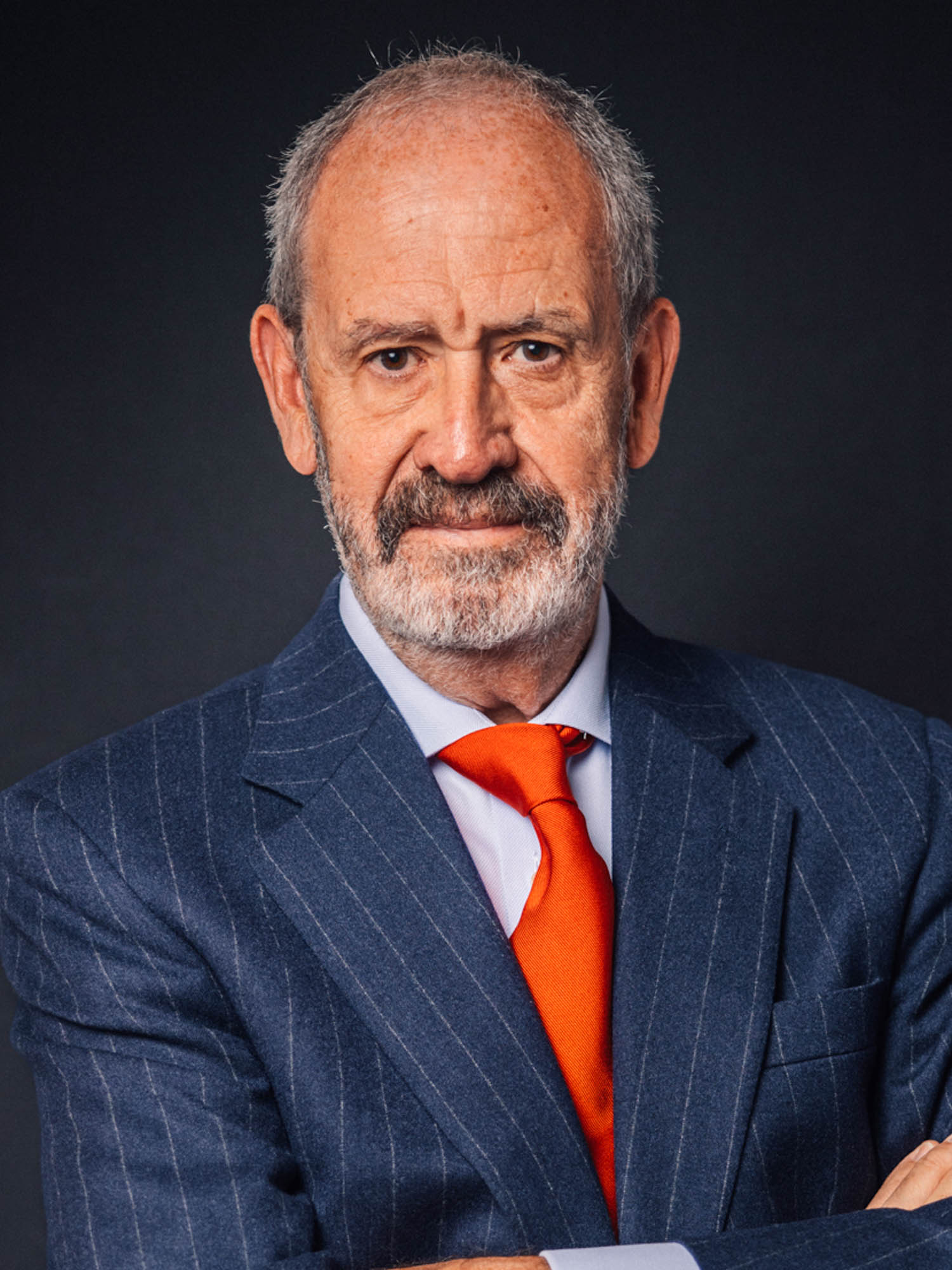
And all guided by Dr. José Luis Marín, medical psychotherapist, president of the International Forum for Psychotherapy Training, honorary president of SEMPyP and FAPYMPE. One of the most respected voices in the Spanish-speaking world in the dialogue between psychopharmacology and psychotherapy, and a rare combination of scientific rigor and clinical humanism that underpins every lesson of the program.
Aimed at Mental Health Professionals
If you work in mental health, you will encounter medicated patients. This course provides you with what you need to not be left out of that conversation —and for your place in it to always be in the patient's service—.
¿Dudas sobre el programa? Habla con un asesor.
Agenda una llamada gratuita y sin compromiso: resolvemos en directo tus dudas sobre el contenido, la acreditación o las formas de pago.
Un programa completo en 4 módulos.
24 clases en vídeo, documentación complementaria y evaluación por módulo. Haz clic en cada módulo para ver todo el contenido detallado.
Introducción a la historia, los conceptos fundamentales y la clasificación de los psicofármacos, con los principios de farmacocinética y farmacodinamia. Profundiza en el tratamiento farmacológico de la ansiedad, desde la comprensión del miedo como emoción básica hasta los ansiolíticos (antihistamínicos, betabloqueantes, fitoderivados y, en especial, las benzodiacepinas), con sus fenómenos de tolerancia y dependencia y las estrategias de deprescripción.
Desarrolla criterios para integrar farmacoterapia y psicoterapia superando su falsa dicotomía. Aborda la psicofarmacología de los trastornos del sueño, con el insomnio «más allá del síntoma», los hipnóticos y la higiene del sueño, y el grupo de los estabilizadores del estado de ánimo, de las sales de litio a los antiepilépticos modernos.
Revisa los antipsicóticos, de los neurolépticos clásicos a los atípicos, con sus efectos y el aumento de su consumo. Ofrece una visión crítica del uso de psicofármacos en los trastornos alimentarios, explora las plantas medicinales con efecto psicotrópico y culmina con un estudio profundo del efecto placebo y su valor terapéutico.
Desarrolla en detalle los antidepresivos, los psicofármacos más utilizados del mundo, de los primeros IMAO a los ISRS e IRSN, con el hipérico como alternativa natural con evidencia. Aborda su uso en los trastornos de personalidad y cierra con una reflexión crítica sobre los mitos de la psiquiatría contemporánea y el uso racional de los psicofármacos.
Cómo funciona el curso.
Un programa 100% online diseñado para combinar estudio autónomo con momentos de interacción directa.
Evaluación y acreditación
Al final de cada módulo hay una autoevaluación tipo test. Para obtener la acreditación hay que completar todos los módulos superando el 80% de aciertos. Dispones de 3 intentos por test. Al superar el programa obtienes el diploma acreditativo con 8 créditos ECTS.
¿Otro curso más de brief psychotherapy?
No todas las formaciones clínicas son iguales. Elige el rigor clínico sobre la divulgación genérica o la teoría desconectada de la consulta.
José Luis Marín López is a renowned psychiatrist and psychotherapist from Spain with over 40 years of experience. As the leader of the International Forum for Training in Psychotherapy, he has been a key figure in advancing psychosomatic medicine and psychotherapy in Spain and internationally. His integrative and evidence-based approach has transformed therapeutic practice, emphasizing the mind-body relationship and the social determinants of mental health.
Profesionales que ya se han formado.
Psicólogos, psiquiatras y psicoterapeutas que aplican lo aprendido en su consulta.
"Me ha gustado mucho, muy completo y recomendable 100%"
"."
"."
"I absolutely loved the professor! His comments and reflections are so realistic, honest, and align perfectly with what I've observed in 20 years of practice. He focuses on the most relevant data we therapists need to know and is very engaging to follow."
"Me ha encantado el profesor, sus comentarios y reflexiones son muy realistas, honestos, y encajan mucho con lo que he observado en 20 años de práctica. Se centra en los datos más relevantes que debemos conocer los terapeutas y es muy entretenido de seguir."
"Un curso completísimo. El experto es online pero te invitan a asistir a un seminario de Formación Continua con el Dr. Marín. Un lujo!"
"Se aborda la psicofarmacología desde una perspectiva humanista y muy respetuosa con los pacientes. Lo recomiendo a todos los psicólogos."
"Ha sido una experiencia fantástica. Muchas gracias al Dr. Marín por cedernos su tiempo y sus conocimientos."
Avalado por las principales instituciones.
Un respaldo institucional que importa para tu currículum, tu carrera y la validez de tu formación continuada.
Colegio Oficial de la Psicología de Madrid (COPM)
Federación de Asociaciones de Psicólogos y Médicos Psicoterapeutas de España (FAPYMPE)
Ilustre Colegio Oficial de Médicos de Madrid (ICOMEM)
SEMPyP (Sociedad Española de Medicina Psicosomática y Psicoterapia)
Diploma · Certified Expert Course in Clinical Psychopharmacology
Expedido tras superar la evaluación de los 4 módulos del programa
Sobre los sellos colegiales del diploma
Para garantizar un respaldo colegial específico y en cumplimiento con la normativa de estas instituciones, la inclusión de los sellos oficiales de los colegios profesionales en el diploma es exclusiva para aquellos alumnos titulados en las áreas de Medicina o Psicología. No obstante, esta distinción no altera el aval institucional a la calidad del programa, garantizando que todos nuestros alumnos, independientemente de su titulación, egresen con una formación cuya excelencia está plenamente reconocida por estas instituciones.
Todo lo que necesitas saber antes de inscribirte.
Si tienes alguna pregunta que no aparezca aquí, escríbenos a info@psychotherapymasters.com y te responderemos personalmente.
El curso es 100% online y de acceso inmediato: en cuanto te inscribes recibes las credenciales del aula virtual y puedes empezar. No hay fechas fijas de inicio ni calendario obligatorio.
Tienes acceso completo durante 1 año para completar los 4 módulos a tu ritmo. La mayoría de alumnos lo completan combinándolo con su actividad clínica habitual.
Estos son los requisitos para acceder al curso:
- No specific degree is required to take the courses.
- However, prior knowledge in the subject matter is recommended.
Al final de cada módulo hay una autoevaluación tipo test con preguntas de opción múltiple. Para obtener la acreditación debes completar todos los módulos respondiendo correctamente al menos al 80% de las preguntas. Dispones de 3 intentos por test.
Al superar el curso recibes el diploma con 8 créditos ECTS.
El precio incluye: acceso completo durante 1 año a las 24 clases en vídeo, toda la documentación complementaria del curso, las autoevaluaciones de cada módulo y el diploma acreditativo al completar el programa.
También puedes pagar a plazos: desde 113 US$/mes en 6 cuotas.
Sí. Si tras inscribirte el curso no es lo que esperabas, tienes hasta 14 días para solicitar la devolución íntegra del importe, según nuestra política de desistimiento.
Además, te recomendamos ver la primera clase gratuita antes de inscribirte, para que puedas comprobar la metodología con total libertad.
Sí, emitimos factura a nombre propio o de empresa/centro sanitario. Para muchos profesionales el curso es deducible como formación continuada. Si necesitas factura específica, indícalo en el momento de la compra.
Becas y acceso solidario
Cada edición reservamos un número limitado de becas parciales para profesionales de Latinoamérica, residentes MIR/PIR y psicoterapeutas en situación de desempleo. Creemos que el conocimiento clínico riguroso no puede depender del código postal.
Empieza hoy.
Acceso inmediato.
Sin compromisos. Acceso al aula virtual tras la inscripción. Y si quieres comprobarlo antes, mira la primera clase gratis.