Course on Stories and Metaphors in Psychotherapy: Applications of Narrative Therapy
«Everything is a true spectacle when one doesn't participate in the game, that's why I like reading so much.» — Edmundo Desnoës


«Everything is a true spectacle when one doesn't participate in the game, that's why I like reading so much.» — Edmundo Desnoës The mind's native language: stories and metaphors as therapeutic tools.
«Todo es un verdadero espectáculo cuando uno no participa en el juego, por eso me gusta tanto leer.»
— Edmundo Desnoës
Course on Stories and Metaphors in Psychotherapy
The mind thinks in stories. That is the basic unit of human thought, and any therapeutic intervention that aims to influence how a person represents themselves and what has happened to them will have to do so, sooner or later, in that language. Lived events disappear, but they are transformed into accounts and narratives in the mind of the person who experienced them. And if we cannot return to the past, we can return to the story that the person has represented, and from there restore what was not present at those moments: accompaniment, courage, justice.
Course Direction
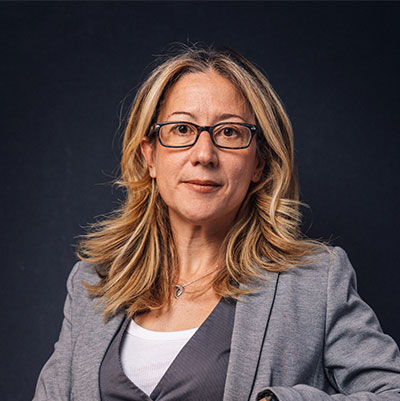
The Course on Stories and Metaphors in Psychotherapy: Applications of Narrative Therapy, directed by Olga Barroso Braojos —a psychologist expert in trauma, attachment, and gender violence, author of books such as Stories for Emotional Development, Bonding and Autonomy through Stories, Neither Pink nor Blue, and The Rainbow Birds—, is born from that conviction and, above all, from the stories she has proven, over more than two decades of clinical work, to be effective.
Course Content
- Stories designed for the consulting room, tested session by session with real patients, and presented here with their structure, logic, and effects analyzed in detail.
- The program addresses narrative therapy in its full clinical scope.
- You will work on how stories facilitate access to traumatic material without retraumatizing.
- How they allow for the creation of therapeutic distance between the person and their suffering.
- How metaphors work to open new experiences through isomorphism and paradox.
- How to construct new narratives oriented towards the present and the future.
Course Approach
The key to the approach lies in a simple yet powerful observation: stories do not speak directly about what happened to the patient, but about a parallel situation that mirrors it. This distance is precisely what allows new ways of seeing oneself and understanding what has been experienced to emerge. What gets stuck head-on, moves sideways.
First Session: Therapeutic Stories and Trauma
The first session presents the foundations of narrative therapy and establishes the conceptual framework of the course:
- Why stories have transformative power.
- How they relate to traumatic memory.
- How they allow the therapist to take a journey through time with the patient to repair what could not happen at the time.
The specific objectives that stories allow to achieve in psychotherapy are introduced, and the first stories of the program are analyzed in detail, all of them specifically designed for work with trauma, attachment, and violence. The session includes guidelines for you to start, from day one, to adapt these stories to your own clinical contexts.
Full Course Description
Second Session: Stories for the Present and Future
The second session, Stories for the Present and Future, develops one of the most relevant and least explored objectives of narrative therapy: placing the person in the position of a reader before their own reality, instead of a protagonist trapped in suffering. This distance, which literature naturally generates, allows the person to:
- Analyze what is happening to them from the outside.
- Reduce traumatic reactivity.
- Make decisions from a clearer place.
Stories oriented towards coping with the present and constructing new future narratives are worked on, and the application of narrative therapy in conjunction with trauma theory and attachment systems —the clinical territory in which Olga Barroso has been working for over two decades— is explored in depth.
Third Session: How to Create Therapeutic Stories and Metaphors
The third session, How to create therapeutic stories and metaphors, is where the program moves from delivering tools to training authors. The characteristics that a therapeutic story must have to be truly therapeutic are analyzed in detail:
- Isomorphism
- Paradoxes
- Contradictory situations that open new experiences
The different types of narrative materials available are worked on:
- Stories
- Metaphors
- Fables
- Therapeutic writing
The goal is for you to finish not only capable of using the stories that Olga Barroso shares throughout the course, but also of adapting, modifying, and creating your own for each patient and each moment of the therapeutic process. So that after these ten hours, you have one more tool in your practice and, moreover, know how to build it to measure.
Methodology
The methodology is consistent with the content: each session starts from real stories, analyzes them in depth, and extracts from them the principles that allow the therapist to replicate that work with their own patients. It is not theory about narrative therapy: it is narrative therapy in action, with its behind-the-scenes explained.
Target Audience
The course is designed for any professional working with patients with:
- Traumatic history
- Attachment difficulties
- Suffering derived from situations of abuse, neglect, or non-nurturing upbringing
But the tools are transferable to a wide variety of clinical profiles: any process in which the person needs to rewrite the story they have of themselves or of what has happened to them is fertile ground for narrative therapy.
Areas of application include:
- Grief processes
- Life crises
- Identity difficulties
- Couple conflicts
- Work with children and adolescents
In all of them, stories open doors that direct discourse cannot move.
Conclusion
And all of it, as the program itself states, is not a course on theory, it is a course to take stories directly into practice the very next day.
¿Dudas sobre el programa? Habla con un asesor.
Agenda una llamada gratuita y sin compromiso: resolvemos en directo tus dudas sobre el contenido, la acreditación o las formas de pago.
Un programa completo, directo al grano.
3 clases en vídeo, documentación complementaria y evaluación por módulo. Haz clic en cada módulo para ver todo el contenido detallado.
Cómo funciona el curso.
Un programa 100% online diseñado para combinar estudio autónomo con momentos de interacción directa.
Evaluación y acreditación
Al final de cada módulo hay una autoevaluación tipo test. Para obtener la acreditación hay que completar todos los módulos superando el 80% de aciertos. Dispones de 3 intentos por test. Al superar el programa obtienes el diploma acreditativo.
¿Otro curso más de clinical interventions?
No todas las formaciones clínicas son iguales. Elige el rigor clínico sobre la divulgación genérica o la teoría desconectada de la consulta.
Specialist in Gender Violence, Trauma, and Attachment
Olga Barroso Braojos is a Spanish psychologist expert in gender violence, trauma, and attachment. With extensive experience, she coordinated specialized resources from the City Council and the Community of Madrid for women survivors of abuse for thirteen years. Currently, she works at her own center specialized in intervention based on Attachment and Trauma theory. She is a trainer, supervisor of intervention teams, and author of key books such as Ni Rosa ni Azul, Los Pájaros Arcoíris, and El amor no maltrata; and she is the coordinator and instructor of the Expert in Psychological Intervention with Victims of Gender Violence program at the Official College of Psychologists of Madrid, a training course delivered in more than 10 editions.
Profesionales que ya se han formado.
Psicólogos, psiquiatras y psicoterapeutas que aplican lo aprendido en su consulta.
"It has allowed me to pick up new ideas and ways to help my patients!"
"I find this training very stimulating and useful, where Olga gradually introduces you to the cases and the therapeutic tools she proposes (her stories and metaphors). It's a proposal that gains value as you progress through the course and start appreciating its clinical possibilities."
"I really liked that it was very practical-oriented. However, I would have liked the shared stories to be in written format in the supplementary material."
"Very interesting!"
"I found it interesting and very didactic. The stories were very useful and the differentiations and uses were very well explained by Olga. I feel it could be longer, giving it a training structure; this was like a small bite to taste the benefits of narrative therapy. I am..."
"Me gustó bastante, uso mucho los cuentos en mi trabajo y esto me ayuda a complementar la práctica y lo teórico."
"The tool of writing in psychotherapy and trauma is one of the most wonderful tools there is, as it allows the patient to observe their traumatic situation in a way that enables them to recapitulate their situation differently without returning to the images they previously..."
"La herramienta de la escritura en la psicoterapia y el trauma,es una de las herramientas más maravillosas que hay, ya que deja observar al paciente su situación traumática, en una forma que permite al paciente recapitular su situación de una forma diferente sin volver a las..."
"Good choice! This learning has allowed me to develop a practical and accessible way to build therapeutic stories and metaphors. I have understood that you don't need to write complex stories to generate a profound impact. Today, I have tools that facilitate therapeutic..."
"Buena elección! Este aprendizaje me ha permitido desarrollar una forma práctica y accesible de construir cuentos terapéuticos y metáforas. He comprendido que no se necesita escribir historias complejas para generar un impacto profundo. Hoy cuento con herramientas que..."
Avalado por las principales instituciones.
Un respaldo institucional que importa para tu currículum, tu carrera y la validez de tu formación continuada.
Colegio Oficial de la Psicología de Madrid (COPM)
Federación de Asociaciones de Psicólogos y Médicos Psicoterapeutas de España (FAPYMPE)
Ilustre Colegio Oficial de Médicos de Madrid (ICOMEM)
SEMPyP (Sociedad Española de Medicina Psicosomática y Psicoterapia)
Diploma · Course on Stories and Metaphors in Psychotherapy: Applications of Narrative Therapy
Expedido tras superar la evaluación del programa completo
Sobre los sellos colegiales del diploma
Para garantizar un respaldo colegial específico y en cumplimiento con la normativa de estas instituciones, la inclusión de los sellos oficiales de los colegios profesionales en el diploma es exclusiva para aquellos alumnos titulados en las áreas de Medicina o Psicología. No obstante, esta distinción no altera el aval institucional a la calidad del programa, garantizando que todos nuestros alumnos, independientemente de su titulación, egresen con una formación cuya excelencia está plenamente reconocida por estas instituciones.
Todo lo que necesitas saber antes de inscribirte.
Si tienes alguna pregunta que no aparezca aquí, escríbenos a info@psychotherapymasters.com y te responderemos personalmente.
El curso es 100% online y de acceso inmediato: en cuanto te inscribes recibes las credenciales del aula virtual y puedes empezar. No hay fechas fijas de inicio ni calendario obligatorio.
Tienes acceso completo durante 1 año para completar el programa a tu ritmo. La mayoría de alumnos lo completan combinándolo con su actividad clínica habitual.
Estos son los requisitos para acceder al curso:
- No specific qualification is required to take the courses.
- However, prior knowledge in the subject matter is recommended.
Al final de cada módulo hay una autoevaluación tipo test con preguntas de opción múltiple. Para obtener la acreditación debes completar todos los módulos respondiendo correctamente al menos al 80% de las preguntas. Dispones de 3 intentos por test.
Al superar el curso recibes el diploma.
El precio incluye: acceso completo durante 1 año a las 3 clases en vídeo, toda la documentación complementaria del curso, las autoevaluaciones de cada módulo y el diploma acreditativo al completar el programa.
También puedes pagar a plazos: desde 55,83 US$/mes en 2 cuotas.
Sí. Si tras inscribirte el curso no es lo que esperabas, tienes hasta 14 días para solicitar la devolución íntegra del importe, según nuestra política de desistimiento.
Sí, emitimos factura a nombre propio o de empresa/centro sanitario. Para muchos profesionales el curso es deducible como formación continuada. Si necesitas factura específica, indícalo en el momento de la compra.
Becas y acceso solidario
Cada edición reservamos un número limitado de becas parciales para profesionales de Latinoamérica, residentes MIR/PIR y psicoterapeutas en situación de desempleo. Creemos que el conocimiento clínico riguroso no puede depender del código postal.
Empieza hoy.
Acceso inmediato.
Sin compromisos. Acceso al aula virtual tras la inscripción.